Vertical Lathe Definition and Applications for Heavy Parts

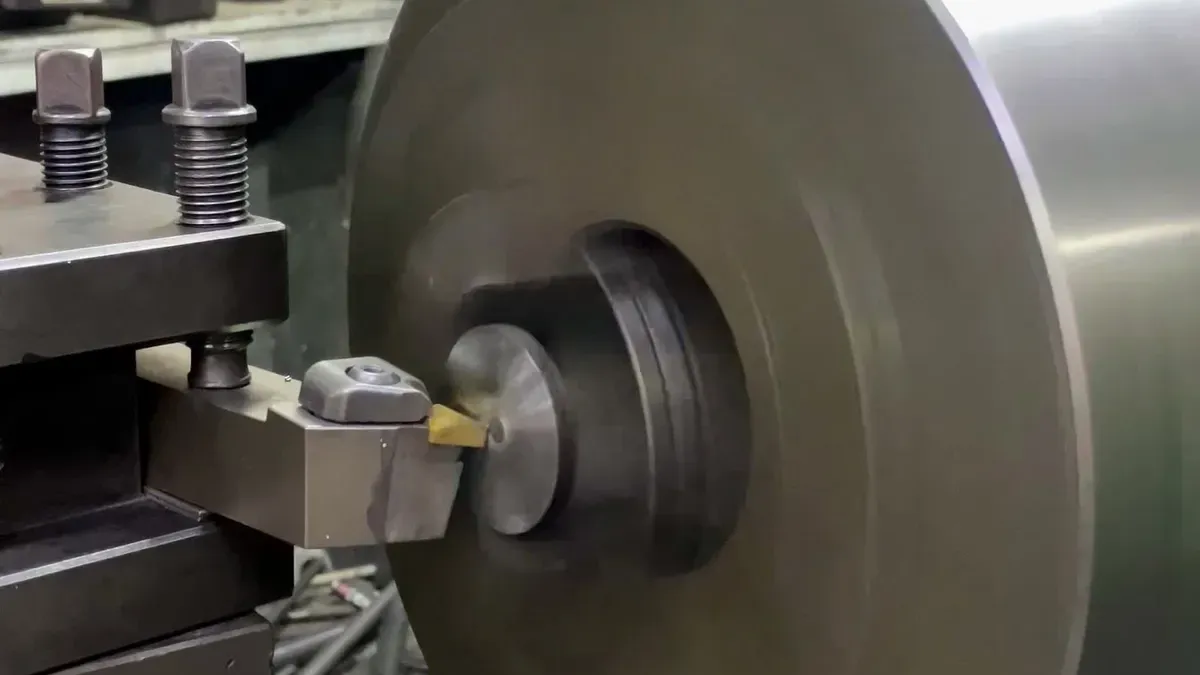
A vertical lathe is a machine tool with a vertical spindle axis. You use it to work on large, heavy parts. These parts are too big around, too short, or too heavy to clamp safely on a horizontal lathe. Gravity helps you here—it pushes the part down onto the table, making it more stable during cutting.
These machines can handle huge sizes. Think about these abilities:
Maximum turning diameter: 320 inches (Max Swing)
Maximum weight capacity: 160 tons (Table Load Capacity)
When your part is too big for a safe clamp on a horizontal machine, a vertical lathe fixes the issue. In the next sections, you'll see a decision chart and real-world uses for heavy parts.
What Is a Vertical Lathe?
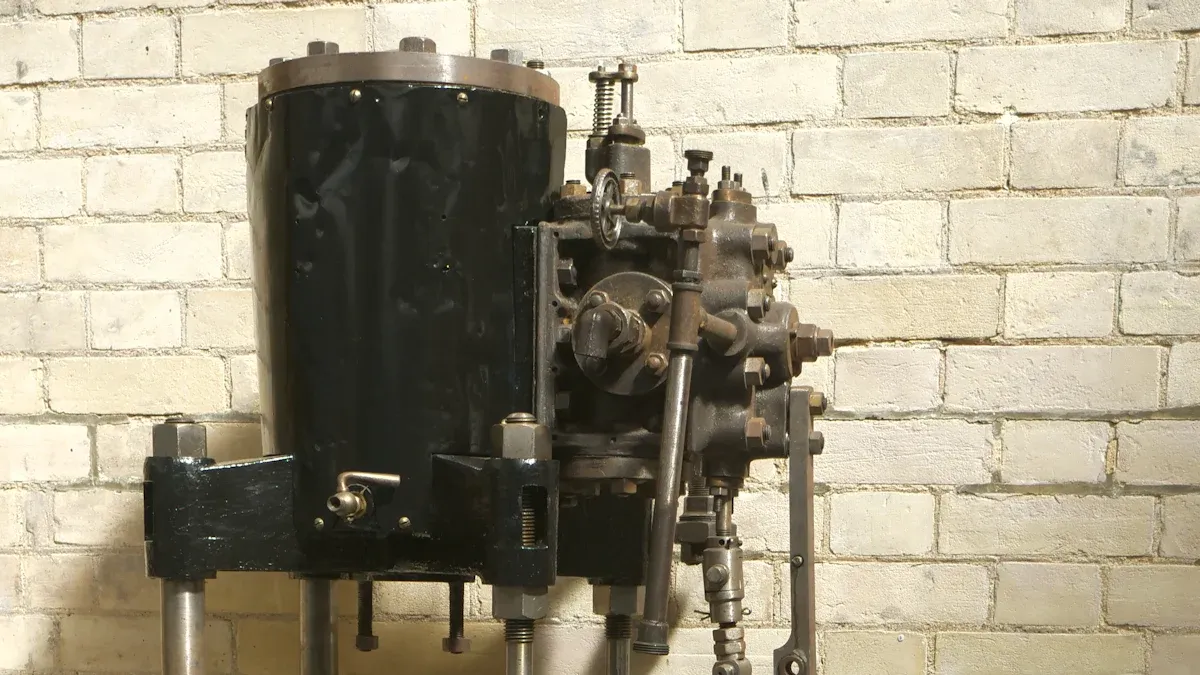
Vertical turning means the workpiece spins on a vertical axis while the cutting tool moves side to side. The spindle sits under a rotary table, and the part rests flat on top. This setup changes how you handle heavy parts. Gravity pulls the workpiece down onto the table, creating natural clamping force. You do not fight gravity—you use it.
These machines go by several names. You might hear vertical turning lathes (VTLs) or vertical turning centers. The names differ, but the principle stays the same. The key difference from a horizontal lathe is not precision. Both machines can hold tight tolerances. The real difference lies in suitability. A vertical lathe excels when your workpiece has a large diameter, a short height, or a heavy weight. Those conditions cause instability on a horizontal machine. The part sags, bends, or becomes hard to clamp securely.
Vertical Spindle and Gravity Clamping
Gravity does real work for you in this setup. The component and clamping device are "gravity assisted" in the vertical direction. That means the weight of your part presses it firmly against the table. You need fewer clamps and less complex fixturing. The part stays stable during cutting because its own mass holds it in place.
Consider the size range these machines handle. The table diameter and maximum turning diameter vary widely across models. Some machines accept truly massive workpieces.
Machine Model | Maximum Turning Diameter (mm) | |
|---|---|---|
CKD SKJT 80-160 A | 8,000 | 14,000 |
CKD SK 40 A | 3,770 | 4,340 |
Froriep 10/6KE350 | 3,500 | 5,800 |
CKD SKDY 63-80 D | 6,300 | 8,000 |
WALDRICH SIEGEN ProfiTurn V 5000/100-Y | 4,500 | 5,000 |
Schiess-Froriep 80 DV | 6,500 / 8,000 | 16,000 |
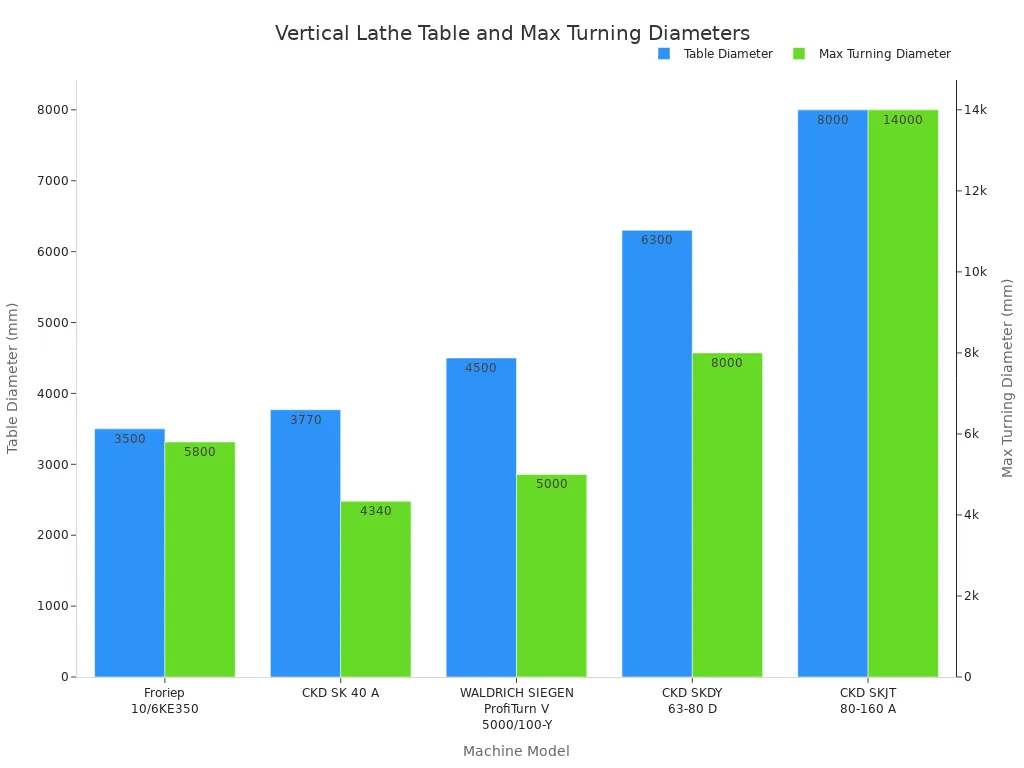
The chart shows how table size relates to turning capacity. Notice how some models can turn parts far larger than their table diameter. That extra reach matters when you work with flanges or rings that extend beyond the mounting surface.
We specialize in very large machines with table diameters up to 4 meters and max swing diameters up to 4.5 meters.
That quote reflects a common focus in this industry. Large table diameters support large parts. The swing diameter tells you the maximum part size you can rotate without hitting the machine structure.
Key Components and Setup
The vertical lathe's core structure starts with a vertical spindle mounted beneath a heavy-duty rotary table. That table serves as the base for holding workpieces. Above the rotating table, a cross rail system spans horizontally between two vertical columns. The cross rail holds the tool post that carries cutting tools. This tool post slides along the rail in vertical or horizontal directions.
You can adjust the cross rail height to fit different workpiece sizes. The tool post moves up, down, left, or right as needed. This setup lets tools approach the workpiece from above or the side. You can perform turning, facing, boring, and drilling operations on the same platform. One setup handles multiple operations, which saves you time and reduces handling errors.
Setting up a vertical lathe follows a logical sequence. First, you clean the table surface. Then you position the workpiece using lifting equipment. The part settles onto the table, and gravity holds it in place. You add clamps or chuck jaws to secure it against lateral forces. Finally, you align the tool post and set your cutting parameters. The whole process takes less time than horizontal setups because you do not need complex counterweights or special fixtures to prevent sagging.
The vertical orientation also improves chip removal. Chips fall away from the cutting zone naturally. They do not pile up around the tool or the workpiece. This keeps the cutting area clear and reduces the risk of chip re-cutting, which can damage surface finish.
Vertical vs. Horizontal Lathes: Key Differences
The choice between a vertical lathe and a horizontal lathe depends on the part's shape and weight, not on how precise it is. Both types of machines can make parts with very tight measurements. The main question is if your workpiece stays steady while being cut. A horizontal lathe holds a long shaft between two centers or in a chuck. That setup works well for long, thin parts. But when you have a large ring, a heavy flange, or a short wide casting, the horizontal setup causes problems. The part bends down under its own weight. It moves away from the cutting tool. Clamping gets hard because you have to fight gravity instead of using it.
A vertical turning lathe is usually better when the part is heavy, has a large diameter compared to its length, or is hard to support without bending.
That advice sums up the main idea. You should pick a vertical lathe when your part's diameter is big compared to its height. You should also pick it when the weight makes clamping on a horizontal machine unstable. Long shafts and small diameters go on horizontal machines. Large, short, heavy parts go on vertical machines.
Stability and Workpiece Support
Stability is the most important thing when machining heavy parts. A vertical lathe uses gravity to push the workpiece flat against the rotating table. This natural clamping force means you need fewer complicated fixtures. The part's own weight holds it in place. You use fewer clamps and spend less time lining up the setup.
The machine's stiffness also helps keep measurements accurate. The cast-iron column acts like a filter for low-frequency vibrations. It stops shaking during heavy cutting, which prevents surface problems and loss of accuracy. The joint between the column and cross rail is very stiff. This allows high cutting forces even when the ram is fully extended, stopping bending that would cause wrong sizes. The ram guideways use Turcite-B material, which has low friction when not moving. This stops the jerky movement during fine finishing cuts, making sure each pass is the same. The cast-iron base absorbs vibrations better and handles temperature changes better than welded frames. These things matter when you machine parts up to 8 tons and 1,100 mm in diameter.
Stability Factor | Impact on Machining Tolerances |
|---|---|
Cast-iron column | Filters out low-frequency vibrations, stops shaking during roughing, and prevents surface errors and loss of accuracy. |
Column-to-crossrail junction rigidity | High stiffness allows high cutting forces even at full ram extension, stopping bending that would cause wrong sizes. |
Ram guideways (Turcite-B) | Low friction when not moving stops jerky movement during fine finishing cuts, making sure each pass is consistent and precise. |
Thermal stability of cast-iron base | Better vibration absorption and temperature stability than welded frames, important for keeping tight measurements in heavy engineering. |
A company that makes large turned parts up to 8 tons says that getting high precision depends on the lathe's ability, not just the operator's skill. They use big lathes from a South Korean maker to cheaply make small batches of heavy parts. Machine stability is needed to meet the high demands of large-part machining.
Chip Removal and Floor Space
Chip removal is very different between the two types of machines. On a horizontal lathe, chips often stay in the cutting area longer. They get caught on jaws, pile up near the tool, or wrap around the carriage. You have to stop often to untangle chip nests and remove debris from under the part. These breaks slow down production and make the operator more tired.
A vertical lathe solves this problem using gravity. Chips fall away from the cutting area by themselves. They drop into a tray below the table instead of wrapping around the part. The chuck area stays cleaner, and you need fewer quick stops to clean. You also see the cutting area better, so it's easier to notice unstable feeds or vibration marks.
Aspect | Vertical Lathe | Horizontal Lathe |
|---|---|---|
Chip removal | Gravity moves chips away; work area cleaner | Chips often stay longer; get caught on jaws, carriage, or pack near tool |
Cleaning frequency | Fewer quick stops to clean; less need to open work area | More stops needed to untangle chip nests and remove chips from under part |
Operator visibility | Better view of cutting area; easier to notice unstable feeds or vibration marks | Part of cutting area falls toward chuck or below sight line; harder to monitor |
Example (large ring/flange) | Chips fall into tray instead of winding around part; chuck area stays clearer | Chips tend to gather around part, requiring more attention |
One note: long, stringy chips from stainless steel or soft metals still need control even on a vertical lathe. Chip removal depends on the tools, feed rate, speed, and coolant. But for most heavy parts, the vertical setup keeps the work area cleaner and cuts downtime.
Floor space also favors the vertical design. A vertical lathe takes up less space than a horizontal machine with the same swing capacity. The workpiece sits flat on the table, so the machine's height does the work instead of its length. This compact layout frees up floor space for other equipment or material handling systems.
When you look at your own parts, use a simple way to decide. If the outer diameter, height, or weight are too much and cause bending, sagging, or clamping problems on a horizontal lathe, pick a vertical lathe. That choice will make your setup more stable, cut setup time, and keep your operation running smoothly.
Applications for Heavy Parts
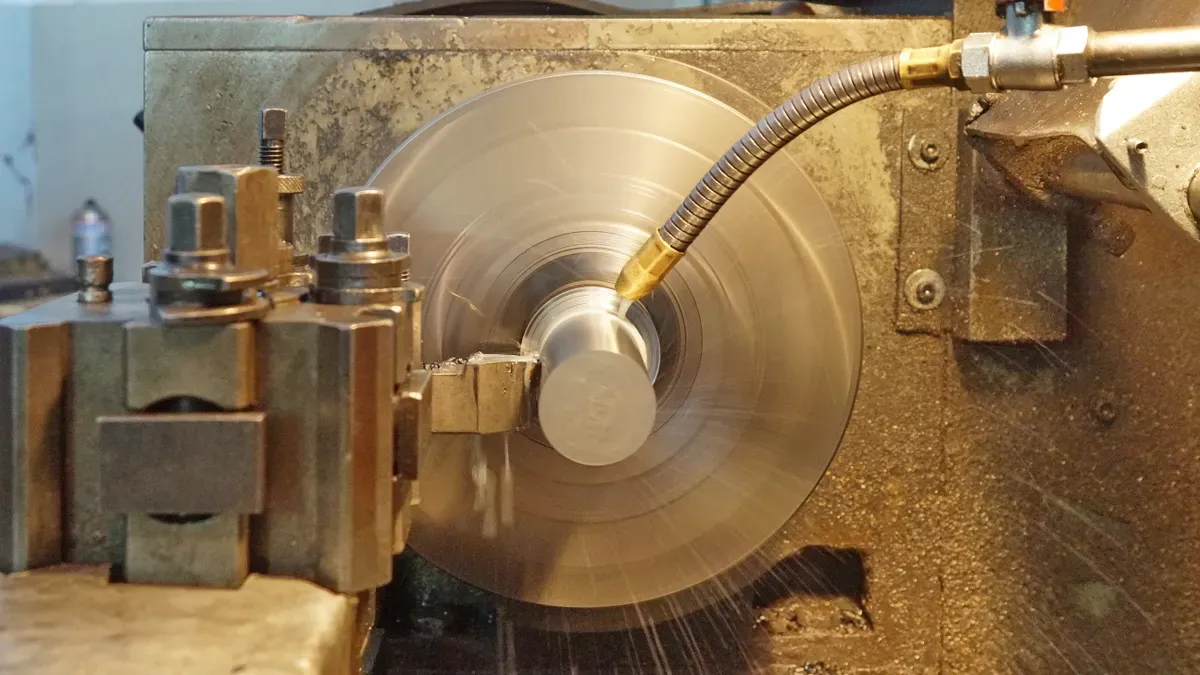
Flanges, Gear Blanks, and Flywheels
Vertical lathes are used every day to make flanges, gear blanks, and flywheels. These parts are wide, flat, and heavy. A horizontal lathe has trouble with them because the weight makes the part bend. The vertical setup fixes this problem. Gravity presses the workpiece flat against the spinning table.
Think about large flanges for pipelines and pressure vessels. One maker reports they can hold tolerances of ±0.02 mm on parts up to 5,200 mm in turning diameter. That accuracy matters when flanges must seal against high pressure. Gear blanks work the same way. You machine the faces, bore the center hole, and turn the outer diameter in one setup. The vertical position stops thin-walled rings from warping.
The specs show why these machines handle heavy parts well. Table diameters range from 1,000 to 5,000 mm. Maximum turning heights reach 800 to 2,000 mm. Weight capacities go up to 20,000 kg. Positioning accuracy reaches ±0.015 mm. You can load a massive casting directly from an overhead crane. Industries include valve manufacturing and underground drilling.
Turbine and Wind Energy Components
Turbine parts need the stability that only a vertical lathe can give. Aircraft turbine disks and shafts require tight tolerances and clean surfaces. The vertical setup uses gravity to hold the part steady during heavy cuts. You avoid the vibration and bending that hurt horizontal machining.
Wind power parts follow the same idea. Rotor shafts, gear hubs, and turbine hubs must fit together exactly. CNC vertical lathes allow precise machining of these parts. The machines can bore, turn, mill, or grind parts several meters in diameter. This multi-function ability cuts setup time.
Energy sector uses go beyond wind turbines. Oil and gas pressure vessels and flanges need the same heavy-duty machining. Navy and commercial steam turbines also depend on large vertical lathes.
CNC vertical lathes enable precise machining of wind turbine components, such as rotor hubs.
When you machine turbine casings, the vertical position proves essential. The part's weight helps steady it during cutting. You get consistent results across large surfaces. This reliability makes vertical lathes the standard choice in aerospace, energy, and heavy equipment industries.
Advantages of Vertical Turning for Heavy Parts
Setup Time and Accuracy Gains
Gravity-assisted clamping cuts your setup time sharply. You place the workpiece on the table, and its own weight holds it flat. You need fewer clamps and less complex fixturing. This simplicity saves minutes on every part change.
Integrated automation takes this further. The EMAG VL series, for example, comes with a standard workpiece conveyor and a self-loading pick-up spindle. The machine loads itself without external automation. This design eliminates additional interface costs and external handling equipment. Short transport distances between the spindle and the workpiece conveyor minimize idle times. The VL 6 model handles parts up to 300 mm in diameter with automatic workpiece changeover. You remove manual intervention and idle waiting. The result is the shortest possible cycle times and a direct reduction in setup time for heavy parts.
Accuracy improves because the workpiece stays stable. On a horizontal lathe, a heavy part sags or deflects under its own weight. The cutting tool meets inconsistent material, and tolerances drift. On a vertical lathe, gravity presses the part flat against the rotating table. The cast-iron column filters out low-frequency vibrations. The ram guideways use Turcite-B material, which stops jerky movement during fine finishing cuts. Each pass stays consistent. You achieve tight tolerances without fighting part movement.
Safety and Ergonomics
Safety improves because the vertical orientation holds heavy parts securely. The part rests flat on the table, and gravity keeps it there. You do not worry about a heavy workpiece slipping out of a horizontal chuck. The clamping force from the table and the part's own weight work together to keep everything stable during cutting. This reduces the risk of accidents during machining.
Operator ergonomics also benefit. You load parts from above using an overhead crane. You do not bend down or reach into a deep horizontal spindle. The table sits at a comfortable height. You see the cutting area clearly without craning your neck. This reduces fatigue over long production runs.
Every VL and VT machine features an integrated O-automation system for transporting workpieces. When combined with the self-loading pick-up spindles, this automation concept ensures short cycle times and high productivity.
You spend less time handling parts and more time cutting metal. The compact vertical design also saves floor space. You fit more equipment into the same area. These advantages make the vertical lathe cost-effective for high-volume heavy part production.
You now see why the vertical lathe stands as the definitive machine for large-diameter, heavy, short-height workpieces. Gravity, stability, and safety make it essential. The choice between vertical and horizontal lathes depends on part geometry and weight, not just precision. Large flanges, flywheels, and turbine components demand the vertical approach. You gain faster setup times, better accuracy, and improved operator safety. Evaluate your own heavy part machining needs. Consider a vertical lathe for optimal results. Your production will run smoother, and your parts will meet tighter tolerances. Make the switch today.
FAQ
How do you decide between a vertical and horizontal lathe?
Start by looking at your part's shape. Measure its diameter, height, and weight. If the diameter is big compared to the height, or if the weight makes the part sag on a horizontal machine, pick a vertical lathe. Long, thin shafts work better on horizontal machines.
What is the maximum weight a vertical lathe can handle?
The weight limit changes with each model. Some machines can hold up to 160 tons. Smaller ones handle 20,000 kg or less. Always check the maker's specs for your exact machine. The table size and machine size set the weight limit.
Can you machine small parts on a vertical lathe?
Yes, you can. Vertical lathes work well for small parts, especially when you need several steps in one setup. The gravity-assisted clamping helps at any size. But for very small, high-volume parts, a horizontal CNC lathe might give faster cycle times.
Do vertical lathes require special operator training?
Operators need training on vertical lathe setup and programming. The loading process is different from horizontal machines. You use overhead cranes and gravity-assisted clamping. Most machinists learn quickly. CNC vertical lathes need standard programming skills plus training on the specific machine interface.
See Also
Understanding Jigs and Fixtures in Manufacturing Operations
Functional Testing in CNC Machining and Die Casting Explained
Why the 1250T Die Casting Machine Suits Large Scale Projects
A Guide to Various CNC Cutting Tool Varieties
Casting Shrinkage and Machining Allowances Explained Clearly
See Also

Established in 2016 and based in Hunan, China, with a liaison point in Berlin, we are a Tier 2 supplier for the automobile industry. We specialize in the production of customized aluminum die-casting parts designed for machines with a closing force ranging from 280 to 1250 tons, with subsequent manufacturing process CNC machining and surface treatment. Our commitment to quality is reflected in our accredited quality management system, certified by ISO9001:2015 and IATF16949:2016 standards.