How Press Quenching Minimizes Distortion in Industrial Parts

Press quenching keeps parts in the right shape. It uses controlled pressure during quenching. Distortion can damage gears and other precise parts. Damaged parts may not work well or may fail. You must learn how the press holds each part tight. This helps you lower mistakes and save money. People in the industry must pay attention to each step. This helps them get the best results.
Why Distortion Happens in Quenching
Causes of Distortion
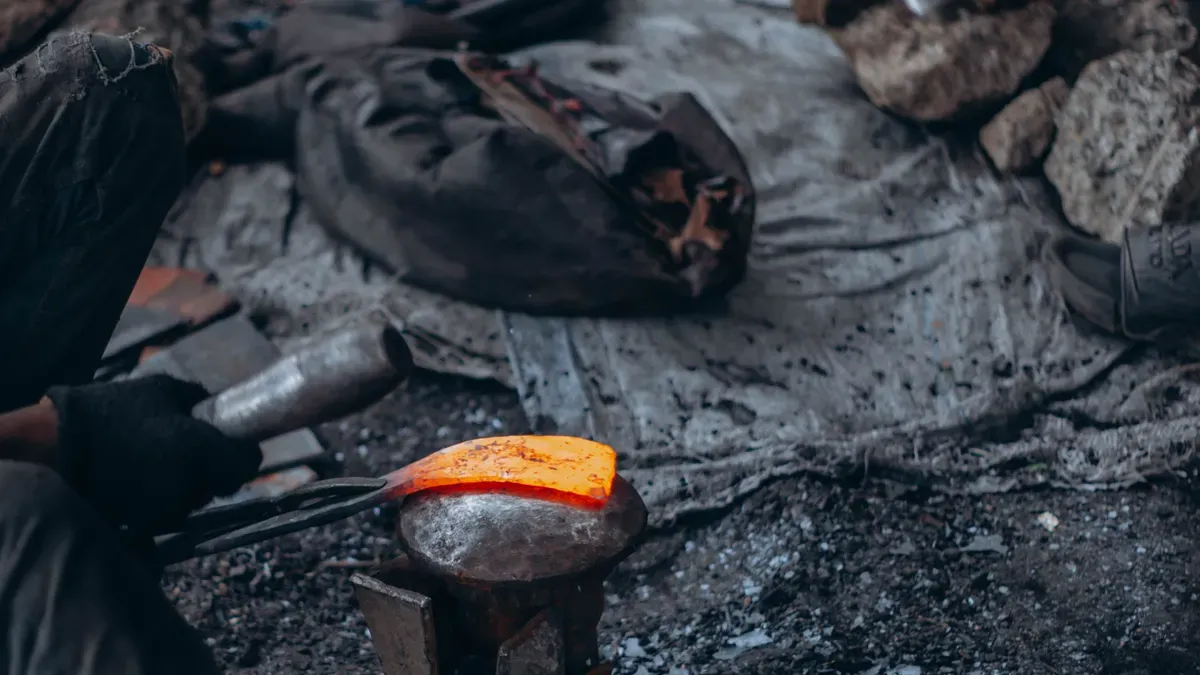
You may notice that parts often change shape during quenching. This happens because quenching cools metal very quickly. When you heat a metal part and then cool it fast, the outside cools before the inside. The metal shrinks as it cools. If the cooling is not even, some areas shrink more than others. This uneven shrinking pulls and pushes the metal in different directions. You see this most in parts with complex shapes or different thicknesses.
Metals also change inside during quenching. The structure of the metal shifts as it cools. These changes can make the metal expand or contract. If you have sharp corners or thin sections, these areas may move more than flat or thick areas. You must pay attention to these details when you plan your quenching process.
Tip: Always check the shape and thickness of your parts before quenching. This helps you predict where distortion might happen.
Effects on Industrial Parts
Distortion from quenching can cause many problems. If you make gears, you need each tooth to line up perfectly. Even a small change in shape can make the gear noisy or weak. High-precision parts, like shafts or rings, need tight tolerances. Quenching can bend or twist these parts. You may have to fix or scrap them if they do not meet your standards.
Here are some common effects of distortion after quenching:
Warping: The part bends out of shape.
Twisting: The part rotates along its length.
Size change: The part becomes too big or too small.
Cracking: Stress from quenching can break the part.
You want to avoid these problems. Distortion wastes time and money. It can also lead to part failure in machines. By understanding why distortion happens during quenching, you can choose better methods to control it.
Press Quenching Process
How Quench Presses Work
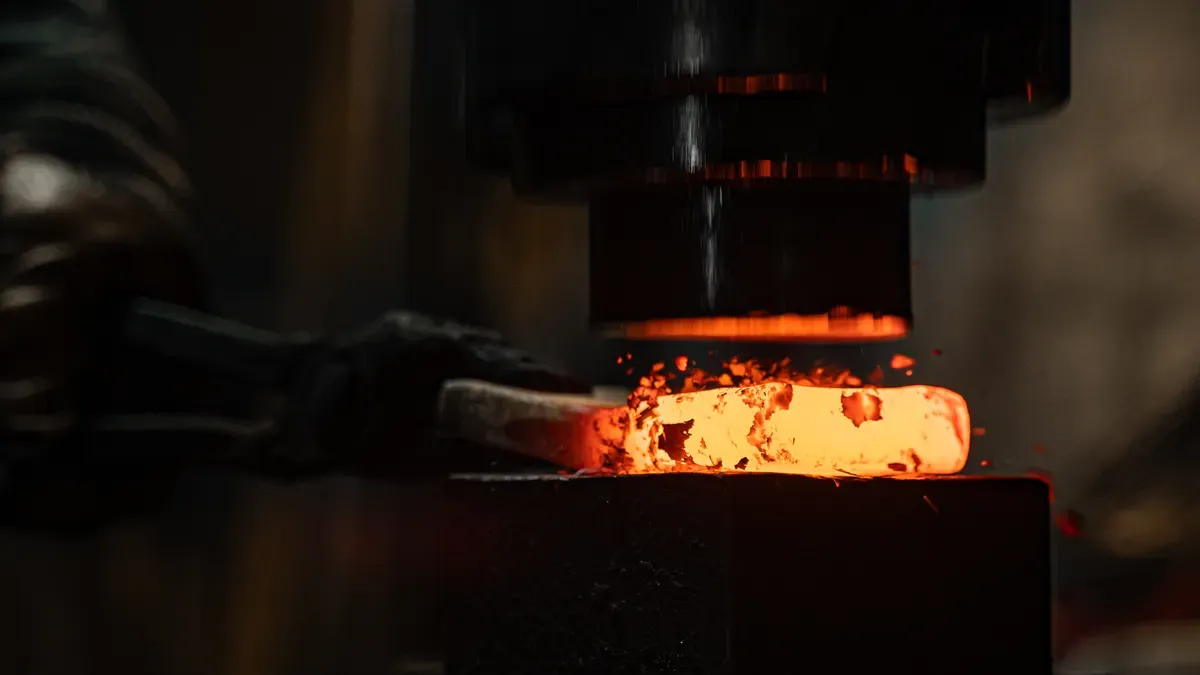
You use a quench press to keep parts in the right shape during quenching. This machine holds each part tightly between upper and lower dies. The dies match the shape of your part, like a gear or a ring. The lower die has special passages that let the quenchant, usually oil, flow around the part. The upper die pushes down and applies force to hold the part flat and steady.
When you start the press quenching process, you follow these main steps:
You heat the part in a furnace as part of the heat treatment.
You move the hot part quickly to the quench press.
The press clamps the part between the dies.
Oil flows over the part. The first oil forms a vapor blanket that insulates the part.
The oil breaks through the vapor layer and starts to cool the part faster.
The oil then cools the part mainly by moving heat away through convection.
You keep the part clamped until it reaches the right temperature.
Note: Press quenching works best for parts like carburized and through-hardened steel gears. You can also use it for rings, bearing races, and other high-precision components.
The quench press uses a strong mechanical force. This force stops the part from bending or twisting as it cools. The press also makes sure the oil flows evenly around the part. This even flow helps you control the cooling rate and reduce distortion.
You often use oil as the quenchant in this quenching technique. The oil temperature usually stays between 75ºF and 165ºF. The right temperature depends on the material and the type of oil. If you use the correct oil temperature, you can lower the risk of distortion during heat treatment.
Key Parameters Controlled
You must control several key parameters during press quenching to get the best results. Each parameter affects how well you keep the part in shape and how much distortion you prevent.
Applied pressure: You set the force that the press uses to hold the part. Too little pressure lets the part move. Too much pressure can damage the part.
Cooling rate: You control how fast the part cools by adjusting the oil temperature and flow. A steady cooling rate helps you avoid cracks and warping.
Part alignment: You must place the part in the press correctly. Good alignment keeps the part flat and prevents twisting.
Material quality and history: You check the material grade and how it was processed before. Some materials need more careful handling during quenching.
Transfer time: You move the part from the furnace to the quench press quickly. Delays can cause uneven cooling.
Quenchant flow: You direct the oil to flow evenly around the part. You can also change the flow direction or pulse the flow for better results.
Die design and maintenance: You keep the dies in good shape. Worn dies can cause uneven pressure and more distortion.
Tip: Always check the contact points where the press holds the part. Good contact helps you keep the part in the right shape.
You can use a table to track the main parameters:
Parameter | Why It Matters |
|---|---|
Applied Pressure | Keeps part from moving or warping |
Cooling Rate | Controls how fast the part hardens |
Part Alignment | Prevents twisting and bending |
Oil Temperature | Affects cooling speed and distortion |
Die Condition | Ensures even force and shape control |
You get the best results from press quenching when you control each parameter carefully. This method works well for complex parts that need tight tolerances. You can use press quenching to make sure your gears, rings, and other parts stay in the right shape after heat treatment.
How Press Quenching Minimizes Distortion
Mechanisms of Shape Control
You use press quenching to keep your parts in the right shape during quenching. The quench press holds each part tightly with special dies. These dies match the shape of your part. When you clamp the part, you stop it from moving or bending as it cools. The press applies steady pressure. This pressure keeps the part flat and prevents twisting.
You control the cooling rate with the quench press. Oil flows around the part and removes heat. You set the oil temperature and flow to match your quench recipe. This helps you avoid cracks and warping. The press also keeps the part aligned. Good alignment stops the part from shifting or tilting. You check the contact points between the dies and the part. Strong contact helps you keep the part in shape.
You use press quenching for gears, rings, and other high-precision parts. These parts need tight tolerances. The press holds them steady during heat treatment. You can adjust the pressure and cooling rate for each part. This makes press quenching a flexible quenching technique.
Tip: Always check the pressure settings on your quench press. Too much pressure can damage the part. Too little pressure lets the part move and distort.
Examples of Distortion Reduction
You see many types of distortion after quenching. Press quenching helps you reduce these problems. Here are some common types of distortion that you can control:
Changes in roundness
Changes in tooth profiles
Warping
Twisting
Dimensional changes
You use press quenching to keep gears flat and round. The quench press stops the gear from warping or twisting. You also keep the tooth profiles sharp and accurate. If you make bearing rings, you use the press to keep them round. You avoid size changes that can make the ring too loose or too tight.
You can see the difference in your parts after press quenching. Gears stay flat and teeth line up. Rings keep their round shape. You get fewer rejects and less rework. You save time and money.
Part Type | Distortion Prevented | Result After Press Quenching |
|---|---|---|
Gears | Warping, tooth profile loss | Flat gears, accurate teeth |
Bearing Rings | Changes in roundness | Round rings, correct size |
Shafts | Twisting, size change | Straight shafts, right diameter |
You choose press quenching when you need high-precision parts. The quench press gives you control over shape and size. You get consistent results with each quenching cycle. You can use press quenching for many steel parts that need tight tolerances after heat treatment.
Note: You can improve your results by adjusting the quench recipe for each part. This helps you match the cooling rate and pressure to the material and shape.
You use press quenching to keep your parts in shape. The press holds the part steady. The oil cools the part evenly. You control the process and get parts that meet your standards.
Practical Considerations for Press Quenching
Part Geometry and Material Limits
You need to think about the shape and size of your parts before you choose this quenching technique. The press works best with flat or round parts, like gears, rings, and discs. If your part has a complex shape or deep grooves, the press may not hold it well. Large parts may not fit in the press. Very thin parts can bend or crack under pressure. You should also check the material. Some steels respond well to quenching, but others may crack or distort even with careful control. If you use alloys with high hardenability, you get better results. You must match the press dies to the part shape for the best fit.
Tip: Always test a sample part in the press before starting full production. This helps you spot problems early.
Cost and Industrial Feasibility
You must consider the cost when you plan to use press quenching in industrial heat treating operations. The press and dies cost more than simple oil tanks. You need skilled workers to set up and run the press. If you make many parts with the same shape, the cost per part goes down. For small batches or many different shapes, the cost goes up. You save money by reducing scrap and rework. You also get better quality parts. Press quenching works best for high-value parts that need tight tolerances. If you make gears for cars or machines, you see the most benefit. For simple shapes or low-cost parts, other quenching methods may work better.
Factor | When Press Quenching Works Best |
|---|---|
Part Shape | Flat, round, or simple geometry |
Part Size | Small to medium |
Material | Steels with good hardenability |
Production Volume | High |
Tolerance Needs | Tight |
You should weigh the cost against the benefits. If you need high precision and less distortion, press quenching gives you strong results in your heat treatment process.
You can control the shape of parts well with press quenching. This method helps you keep gears and rings the right size. You need to check things like part size, shape, and how much pressure you use. The table below shows what is important for making good parts:
Factor | Description |
|---|---|
Part size and geometry | The gear must fit inside the press, and tricky shapes may need special tools. |
Surface damage risk | If the part is not lined up right, the surface can get damaged, so you must control the pressure carefully. |
Residual stress and cracking | If you squeeze too hard when it’s hot, the part can crack inside. |
Cost and throughput | Press quenching costs more and is harder than open-oil quenching, so it is best for very exact parts. |
You should pick press quenching when you need parts that must be very exact in shape and size.
FAQ
What parts benefit most from press quenching?
You get the best results with gears, rings, and discs. These parts need tight tolerances and precise shapes. Press quenching helps you keep them flat, round, and free from warping.
Can you use press quenching for all metals?
You should use press quenching mainly for steels with good hardenability. Some metals may crack or distort even with careful control. Always check your material before choosing this method.
How does press quenching reduce scrap rates?
Press quenching holds each part in place. You see less warping and fewer cracks. This means you throw away fewer parts and save money.
Is press quenching more expensive than other methods?
Press quenching costs more because you need special presses and dies. You also need skilled workers. You save money by making fewer mistakes and getting better quality parts.
See Also
The Effects of Thermal Stress on Die Casting Processes
Understanding Shrinkage Porosity in Metal Casting Techniques
Achieving Net Shape Through Effective Die Casting Methods
Enhancing Manufacturing Efficiency with Cutting Die Blanking
A Comparison of Vacuum Heat Treatment and Thermomechanical Processes
About Hunan Puka

Established in 2016 and based in Hunan, China, with a liaison point in Berlin, we are a Tier 2 supplier for the automobile industry. We specialize in the production of customized aluminum die-casting parts designed for machines with a closing force ranging from 280 to 1250 tons, with subsequent manufacturing process CNC machining and surface treatment. Our commitment to quality is reflected in our accredited quality management system, certified by ISO9001:2015 and IATF16949:2016 standards.