Understanding Poka-Yoke and How It Prevents Mistakes

You use Poka-Yoke to stop mistakes before they start. This easy idea helps you make your work better. Many businesses trust this way to fix their work steps. You can see how it works in factories and hospitals. You also see it in your everyday life. The table below shows how different groups use Poka-Yoke to stop errors and work faster:
Industry Sector | Implementation Status |
|---|---|
Healthcare | Widely implemented |
Manufacturing | Widely implemented |
Automation | Widely implemented |
Service Industry | Widely implemented |
Daily Life | Commonly applied |
What Is Poka-Yoke?
Definition and Meaning
You can think of Poka-Yoke as a way to stop mistakes before they happen. This method comes from Japan. The words "Poka" mean unintentional error, and "Yoke" means prevention. You use this approach to make sure errors do not reach the next step in your process. Many Lean Management experts say that Poka-Yoke helps you reach zero-defect production. You focus on places where people might make mistakes. You set up simple checks or devices to catch errors early. This idea helps you improve quality and avoid problems later.
Tip: When you use Poka-Yoke, you do not just fix mistakes—you prevent them from happening at all.
Lean Management Context
You find Poka-Yoke as a key part of Lean Management. Lean Management wants you to remove waste and make work better. Poka-Yoke fits this goal by stopping errors before they cause bigger issues. You can see how it works with other Lean tools in the table below:
Method | Purpose | Description |
|---|---|---|
Jidoka | Detects errors | Machines stop by themselves when they find a problem. This keeps quality high. |
Poka Yoke | Prevents errors | You set up steps or devices to stop mistakes before they happen. This keeps your process smooth. |
You use Poka-Yoke to make sure your work is right the first time. This saves you time and effort. You do not need to fix as many problems later.
Origins and Development
You can trace the start of Poka-Yoke to the 1960s. Shigeo Shingo, an engineer at Toyota, created this idea. He wanted to help workers avoid mistakes in factories. At first, he called it "Baka-Yoke," which means "fool-proofing." Later, he changed the name to Poka-Yoke to sound more positive. You can see the main events in the table below:
Year | Event/Contribution | Description |
|---|---|---|
1961 | Introduction of Baka-Yoke | Shigeo Shingo shared the idea of mistake-proofing in Japanese factories. |
1961 | The name changed to avoid negative feelings and focus on error prevention. | |
1960s | Integration into Toyota Production System | Toyota used Poka-Yoke to cut down on human errors in making cars. |
You can thank Shigeo Shingo for bringing Poka-Yoke to the world. Today, you see this method in many places, from car factories to hospitals and even in your home.
How Poka-Yoke Works
Error Prevention Methods
You can use different methods to stop mistakes before they happen. Poka-Yoke gives you simple ways to check your work and keep your process safe. You can see the main types of error prevention in the table below:
Type | Description |
|---|---|
Checking | Ensures the correct preparation of the process before starting work, confirming the position of parts. |
Monitoring | Constantly observes the process sequence, issuing warnings if discrepancies are detected. |
Self-examination | Workers verify their work for errors after completion, often using templates for accuracy. |
You can use checking to make sure everything is ready before you start. Monitoring helps you watch each step and catch problems right away. Self-examination lets you review your work and fix errors before moving on. These methods help you build quality into your process.
Note: When you use these methods, you do not wait for mistakes to happen. You stop them before they cause trouble.
Detection Mechanisms
You can find errors early by using detection mechanisms. These tools or systems alert you when something goes wrong. For example, you might use sensors or alarms to warn you if a part is missing. Some machines stop working if they sense a problem. This keeps you from making more mistakes.
You can also use visual signals, like lights or color codes, to show you if something is wrong. These signals make it easy for you to spot errors and take action. When you use detection mechanisms, you make your work safer and more reliable.
Examples in Practice
You can see Poka-Yoke in many places. In factories, you might find automatic optical inspection systems. These systems check goods as they come in and go out. They make sure everything meets quality standards. You might also see auto-ID systems. These systems count and record parts to help you avoid mix-ups.
In your daily life, you use simple devices to prevent mistakes. For example, you might use a plug that only fits one way into an outlet. This design keeps you from plugging it in the wrong way. You might also use a measuring cup with clear lines to help you pour the right amount. These aids make your tasks easier and help you avoid common errors.
Tip: You can use Poka-Yoke ideas at home, at school, or at work. Simple tools can help you do things right every time.
Poka-Yoke Benefits and Limitations
Key Advantages
You get many good things when you use mistake-proofing. This method helps you find errors before they turn into big trouble. You save time because you do not fix as many mistakes. You also make your products or services better. Workers feel less worried because the process helps them avoid errors.
Here are some main advantages:
You cut down on waste and save money.
You earn trust from customers by giving better results.
You make your workplace safer by stopping dangerous mistakes.
You help everyone learn and get better together.
When you use simple checks and devices, your process gets stronger and more reliable.
Common Challenges
You can run into problems when you try mistake-proofing, especially with hard jobs. Some systems are tough to set up or understand. Workers may need extra time to learn new tools.
These workers often spend more time using poka-yoke because it is hard and they do not know how to use the poka-yoke systems.
You might also see these common problems:
Initial investment costs: You may have to spend more money at first for equipment and training.
Complexity: Some solutions are hard to design and use, especially for special jobs.
Lack of flexibility: Stiff systems make it hard to change your process when you need to.
Possible over-complication: Complicated systems can confuse workers and slow down the work.
Meier says poka-yoke can hurt productivity if the sensors or systems are too hard to use. Most times, engineers make poka-yoke systems but frontline workers who use them are not as skilled.
You can fix many of these problems by keeping your solutions simple and making sure everyone knows how to use them.
Poka-Yoke Applications
Manufacturing Uses
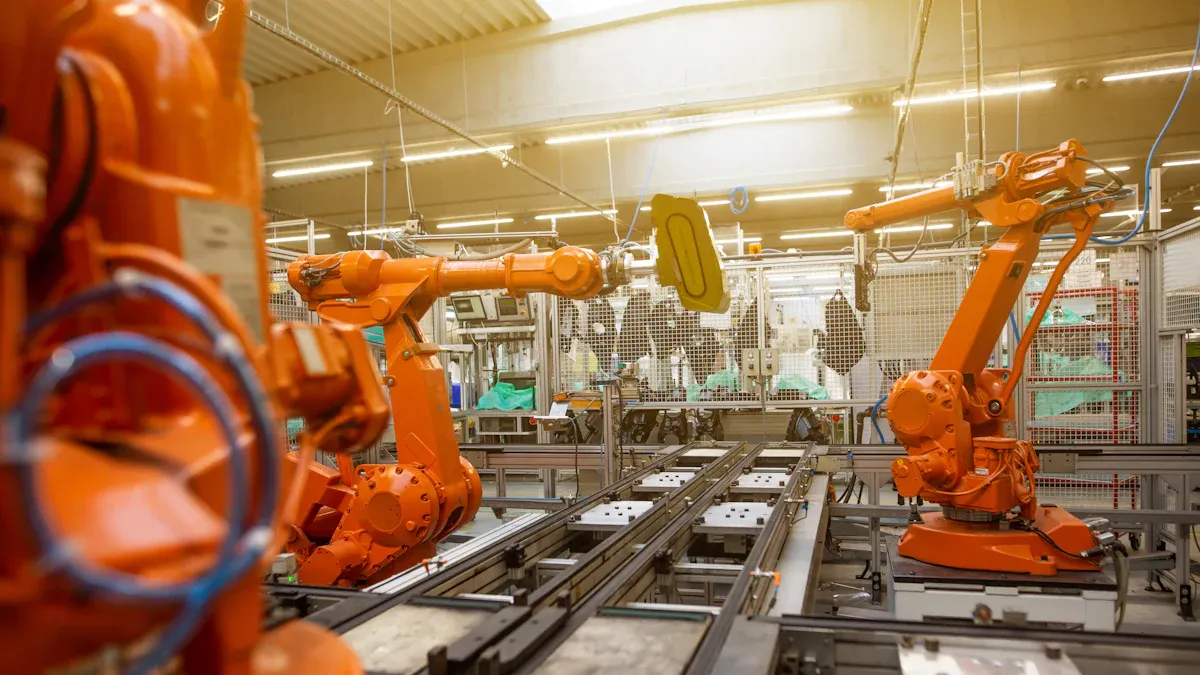
You see Poka-Yoke in many factories today. Workers use it to stop mistakes before they happen. You find it in these areas:
Production lines use special tools to make sure parts fit only one way.
Logistics and warehouses use barcode scanners to check items before shipping.
Machines stop if you put a part in the wrong place.
Workers use checklists to make sure every step is done right.
You can look at this table to see how factories use mistake-proofing:
Area | Example of Use |
|---|---|
Assembly | Jigs that only fit correct parts |
Material Processing | Sensors that check for missing pieces |
Warehousing | Barcode scanning for correct picking |
Shipping | Weight checks to avoid wrong packages |
These steps help you make products with fewer errors and keep customers happy.
Service and Office Settings
You can use mistake-proofing in offices and service jobs too. You design forms that help you collect the right information from customers. You set up steps so you do not miss important details. Here are some ways you use it:
Forms with required fields stop you from leaving out key details.
Computer systems warn you if you enter the wrong data.
Checklists help you finish every task in the right order.
You make your work easier and more accurate when you use these tools.
Tip: Simple changes in your process can help you avoid costly mistakes in service jobs.
Everyday Life
You use mistake-proofing at home and in daily tasks. You see it when you plug in a USB drive. It only fits one way, so you cannot make a mistake. You use measuring cups with clear lines to pour the right amount. You find child-proof caps on medicine bottles to keep kids safe.
Here are more examples:
Microwave ovens will not start if the door is open.
Cars beep if you forget to fasten your seatbelt.
ATMs return your card before giving you cash so you do not forget it.
You use Poka-Yoke every day, often without even thinking about it. These small changes make your life safer and easier.
Implementing Poka-Yoke
Step-by-Step Guide
You can set up a Poka-Yoke system in your process by following these steps:
Look at your current process. Find where mistakes often happen.
Decide which errors are most important to fix first.
Create and put in place simple solutions that stop or catch these mistakes.
Teach everyone how to use the new tools or steps.
Watch how the new system works. Make changes to improve it over time.
Tip: Start with small changes. You can always add more solutions as you learn what works best.
Tips for Success
You can make your mistake-proofing efforts stronger with a few smart moves:
Keep your solutions simple. Complicated systems can confuse people.
Involve your team. Workers often know where mistakes happen.
Test your ideas before using them everywhere.
Give clear instructions and training.
Check your process often. Look for new ways to improve.
Celebrate small wins. This helps everyone stay motivated.
Remember, you do not need fancy tools to use Poka-Yoke. Even small changes can make a big difference in quality and safety.
You can use Poka-Yoke to make your work better and safer. This method helps you stop errors before they happen. When you use it, you support a culture of learning and growth.
It improves quality and efficiency in your process.
It encourages you to look for ways to prevent mistakes.
It helps you reach the goals of quality management.
Start looking for small changes you can make today to build a stronger process.
FAQ
What does Poka-Yoke mean?
Poka-Yoke means "mistake-proofing" in Japanese. You use it to stop errors before they happen. This method helps you make your work safer and better.
Can you use Poka-Yoke outside factories?
Yes! You use Poka-Yoke at home, in schools, and in offices. For example, you see it in child-proof caps, seatbelt alarms, and forms that check for missing information.
How do you start using Poka-Yoke?
Start by looking for common mistakes in your process. Pick one problem. Create a simple tool or step to stop that mistake. Teach others how to use it.
What is a simple example of Poka-Yoke?
You use a USB plug that only fits one way. This design stops you from plugging it in wrong. You find many simple examples like this in daily life.
See Also
The Importance of Fool-Proofing in Today's Manufacturing Industry
Exploring Jidoka: Key Concepts in Lean Manufacturing Practices
Statistical Process Control: Enhancing Production Quality and Efficiency
The Significance of APQP in Automotive and Aviation Industries
Understanding Jigs and Fixtures in Manufacturing Operations
About Hunan Puka

Established in 2016 and based in Hunan, China, with a liaison point in Berlin, we are a Tier 2 supplier for the automobile industry. We specialize in the production of customized aluminum die-casting parts designed for machines with a closing force ranging from 280 to 1250 tons, with subsequent manufacturing process CNC machining and surface treatment. Our commitment to quality is reflected in our accredited quality management system, certified by ISO9001:2015 and IATF16949:2016 standards.