Understanding the Machines Behind Rail Bending Production

To achieve effective bend rail production, you need a few important machines. These include hydraulic rail benders, section bending machines, CNC tube bending machines, press brakes, and pipe benders. Each bending machine is designed to shape rails for different jobs. When you utilize a metal bending machine, you create smooth rail joints, which contributes to better products. The right bending machine enhances your bending accuracy and also enables you to work faster and more efficiently.
Types of Rail Bending Machines
If you work with rail bending, you should know the main machine types. Each one helps shape rails for different kinds of jobs. New technology makes these machines stronger and easier to use. They are also more accurate now. Here are the most important machines you will see in rail factories.
Hydraulic Rail Benders
Hydraulic rail benders use hydraulic power to bend steel rails. These machines can shape heavy rails with a lot of force. They help you make smooth curves and exact bends. Many new hydraulic rail benders have digital screens and better hydraulic systems. Some, like the horizontal hydraulic rail bender, let you control the bend more closely. You use these machines for big rail projects or when you need to bend thick steel rails.
Tip: Hydraulic rail benders are strong and good for hard jobs. You can use them to bend or straighten rails in the shop or outside.
Section Bending Machines (CNC/NC)
Section bending machines are also called profile benders. They bend pipes, square tubes, and solid rods. Companies like Zopf make section bending machines with digital controls and CNC systems. With a cnc bending machine, you can set the shape and angle you want. This helps you make the same bend many times. These machines are good for custom shapes or tight curves.
New features in section bending machines:
Digital screens for easy checking
Hydraulic systems for smooth bending
CNC controls for exact and repeatable bends
Section bending machines work for small or big jobs. You can use them for many steel shapes in rail making.
CNC Tube Bending Machines
CNC tube bending machines use computers to bend tubes and pipes very accurately. You can set them to make hard shapes and many bends at once. This saves time and helps you make fewer mistakes. A tube pipe bending machine is great for railings, handrails, or special rail parts that need exact curves. These machines use automation to make work faster and keep every bend the same.
Note: CNC tube bending machines help you make detailed rail parts with less work. The machine follows your design every time.
Press Brakes and Pipe Benders
Press brakes and pipe benders are important for rail bending. A sheet metal press brake uses strong force to bend flat steel sheets into rails or other shapes. Many press brakes now use automation, so you can work faster and avoid delays. You can also use a 3 roll plate bending machine or a 4 roll plate bending machine to make curved steel plates.
Here is a table that shows the main good points of using press brakes and pipe benders:
Advantage | Description |
|---|---|
Bending Capacity | Hydraulic press brakes can bend thicker and stronger metal because they have high power. |
Accuracy | These machines let you control each bend, so it matches your plan. |
Versatility | You can make many bends at different angles for custom rail jobs. |
You might also use an automatic panel bender for fast and repeatable bends in sheet metal. For small jobs or repairs, a mechanical bending machine gives you more control.
When you pick a metal bending machine for rail making, think about the bends you need, the size of your rails, and how many parts you want to make. Each machine has a special job to help your rails stay strong, smooth, and ready to use.
How Metal Bending Machines Work
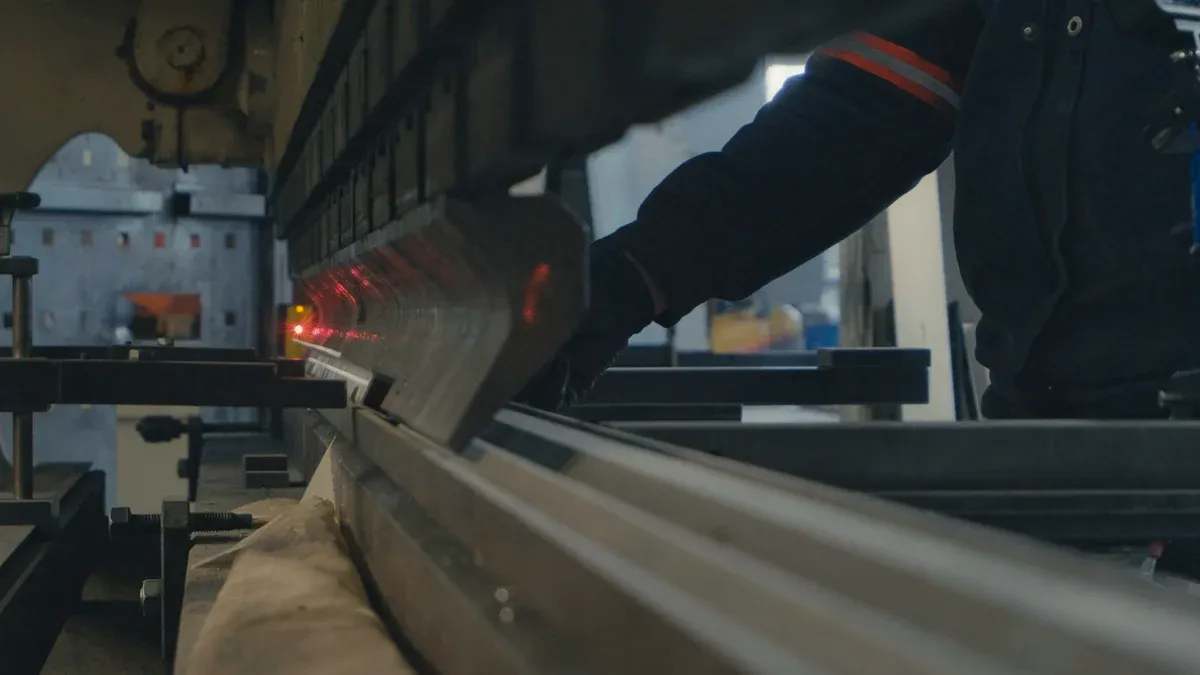
Operating Principles
When you use a bending machine for rail production, you follow a few main steps. These steps help you shape metal rails with accuracy and strength.
You start with elastic deformation. The machine applies pressure, and the rail flexes. At this stage, the metal bends but does not change shape forever.
Next, you reach plastic deformation. The pressure increases, and the rail passes its yield point. Now, the metal changes its internal structure and keeps the new shape.
After you remove the force, the rail tries to return to its old shape. This is called springback. You must bend the rail a little more than needed to get the right angle.
This process lets you use a metal bending machine to create strong and smooth rails for many projects.
Key Features and Components
A good bending machine has several important parts. You will find a strong frame, rollers or dies, and a control system. The frame holds everything steady. Rollers or dies press against the rail and shape it during bending. The control system lets you set the angle and force for each bend.
Component | Purpose |
|---|---|
Frame | Supports the machine |
Rollers/Dies | Shape the rail during bending |
Control Panel | Sets angle and pressure |
Some machines use digital screens or CNC controls. These features help you make each bend the same every time.
Safety in Operation
You must always think about safety when you use a bending machine. Wear gloves and safety glasses to protect your hands and eyes. Keep your hands away from moving parts. Make sure the area around the machine stays clean and dry.
Tip: Always check the machine before you start. Look for loose bolts or damaged parts. A safe workspace helps you avoid accidents and keeps your bending jobs on track.
Advantages and Applications
Hydraulic Benders – Power and Versatility
Hydraulic bending machines are good for thick steel rails. They use strong force to shape rails for big jobs. You see hydraulic benders in large rail factories. They help make smooth curves and fix rail joints. You can use them in the shop or outside. Spare parts are easy to get, so production keeps going. Hydraulic benders are great for custom bends and straightening rails that need extra power.
CNC Machines – Precision and Automation
A cnc bending machine gives you high accuracy and automation. You can program it to make complex bends many times. This helps you avoid mistakes and saves time. CNC machines do not need much operator skill. You get the same results every time. You can use a tube pipe bending machine or a sheet metal press brake with CNC controls for detailed rail parts. Maintenance is easy, and service kits last for years. Here is a table that shows how CNC machines compare to manual methods:
Feature | Manual Method | |
|---|---|---|
Precision | Very accurate | Depends on operator skill |
Automation | Fully automated | Manual operation |
Repeatability | Very consistent | Results can change |
Complexity of Shapes | Can do complex shapes | Only simple shapes |
Human Error | Less mistakes | More mistakes possible |
Skill Dependency | Needs little skill | Needs high skill |
You can also use an automatic panel bender, a 3 roll plate bending machine, or a 4 roll plate bending machine for special shapes and big panels.
Manual and Mobile Units – Flexibility
Manual and mobile bending machines are flexible for small jobs or repairs. You can use a mechanical bending machine for more control. These machines are easy to move and set up. They work well for quick fixes or bending rails outside. You can make custom bends and change the machine for different rail sizes. Manual units help you keep production going, even without big equipment.
Tip: Pick the right bending machine for your project. Think about the bends you need, the rail size, and how many parts you want to make. The right machine helps you fix rail joints and make strong, smooth rails for any job.
Choosing Machines for Bend Rail Production
Assessing Rail Specs and Volume
You should start by looking at the size and type of rails you need to bend. Some rails are thick and heavy. Others are thin or have special shapes. If you work with large rails, you need a strong bending machine. For small or custom rails, a tube pipe bending machine or a manual bender might work best. Think about how many rails you want to bend each day. High-volume bend rail production needs machines that work fast and can repeat the same bend many times. If you only do a few bends, a manual machine can save money.
Budget and Operational Needs
Your budget plays a big role in your choice. Some machines cost more at first, but they save money over time. Here is a table to help you compare costs and returns:
Machine Type | Initial Investment | ROI Considerations |
|---|---|---|
Manual Bending Machines | Low | Quick ROI for small jobs, but high labor costs for volume work. |
Sheet Metal Rollers | Moderate | Good ROI for regular production of curved components, efficiency depends on skill. |
Hydraulic Press Brakes | Significant | Excellent ROI for high-quality, diverse bending and custom fabrication. |
Roll Forming Machines | Highest | Fast ROI for high-volume production, payback periods as short as 2 to 6 months. |
If you need high accuracy and speed, a CNC bending machine or a hydraulic press brake can help. These machines cost more, but they make bend rail production faster and more precise. For small jobs, manual machines keep costs low.
Project-Specific Selection Tips
Every project is different. You should match the machine to your job. Here are some tips:
Check the rail shape and thickness before you choose a machine.
For custom bends, use a CNC or section bender.
For repairs or field work, pick a mobile or manual bending machine.
If you need many bends, choose a machine with automation.
Always think about safety and training for your team.
Tip: Test a sample bend before starting full production. This helps you avoid mistakes and keeps your rails strong.
When you choose the right metal bending machine, you make your bending jobs easier and your rails better. The right choice helps you finish projects on time and keeps your bend rail production running smoothly.
You need to understand each rail bending machine to make smart choices for your projects. The right bending tool helps you get smooth rails and strong joints. You improve bending accuracy and speed when you match the machine to your needs. Quality bending leads to better rail production and safer tracks.
Remember: Good bending practices keep your work safe and reliable.
Next Steps:
Review your bending needs.
Compare machine features.
Ask experts about bending solutions.
Plan your next bending project with care.
FAQ
What is the best machine for bending thick steel rails?
A hydraulic rail bender is best for thick steel rails. It uses strong force to bend the rails. This machine makes smooth bends. It is good for big rail projects.
How do CNC bending machines help with rail production?
CNC bending machines let you pick the angle and shape you want. They make the same bend every time. Automation helps you work faster and make fewer mistakes.
Tip: CNC machines help you finish faster and make fewer errors.
Can you use manual bending machines for large projects?
Manual bending machines are good for small jobs or fixing rails. For big projects, you need a stronger and faster machine. Manual machines can slow down your work.
What safety steps should you follow when using rail bending machines?
You need to wear gloves and safety glasses. Keep your hands away from the moving parts. Always check the machine for problems before you start.
Safety Step | Why It Matters |
|---|---|
Wear protection | Stops you from getting hurt |
Inspect machine | Helps you avoid accidents |
Stay alert | Keeps you safe |
See Also
A Comprehensive Guide to Jigs and Fixtures in Manufacturing
Exploring Various Types of CNC Cutting Tools Available
An Easy Guide to Subtractive Manufacturing Techniques
The Role of Functional Testing in CNC and Die Casting
The Importance of Fool-Proofing in Today's Manufacturing Industry
About Hunan Puka

Established in 2016 and based in Hunan, China, with a liaison point in Berlin, we are a Tier 2 supplier for the automobile industry. We specialize in the production of customized aluminum die-casting parts designed for machines with a closing force ranging from 280 to 1250 tons, with subsequent manufacturing process CNC machining and surface treatment. Our commitment to quality is reflected in our accredited quality management system, certified by ISO9001:2015 and IATF16949:2016 standards.