Low Pressure vs High Pressure Die Casting for Technical Decision Makers

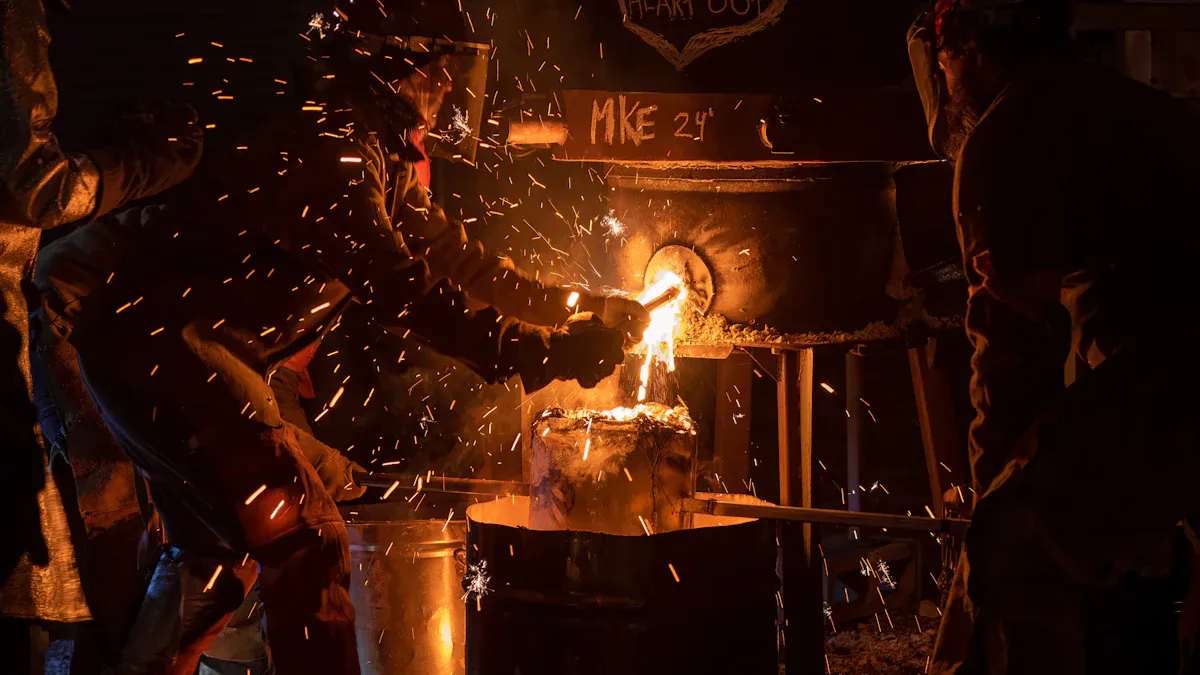
You need to pick between Low Pressure and High Pressure die casting. Your choice depends on part size, how complex it is, how many you need, and cost. The main differences will affect your project. The table below shows how pressure, casting density, and mold cost are different for each method.
Casting Method | Advantages | Disadvantages | |
|---|---|---|---|
Low-Pressure Casting | 0.01-0.1 MPa | Makes strong parts, has fewer holes, and can make bigger parts. | Takes longer, costs more for molds, and does not work well for very thin parts. |
High-Pressure Die Casting | 10-200 MPa | Makes lots of parts fast, works for thin and complex parts, and gives smooth surfaces. | Parts often have holes inside, and molds cost a lot. |
Die Casting Process Comparison
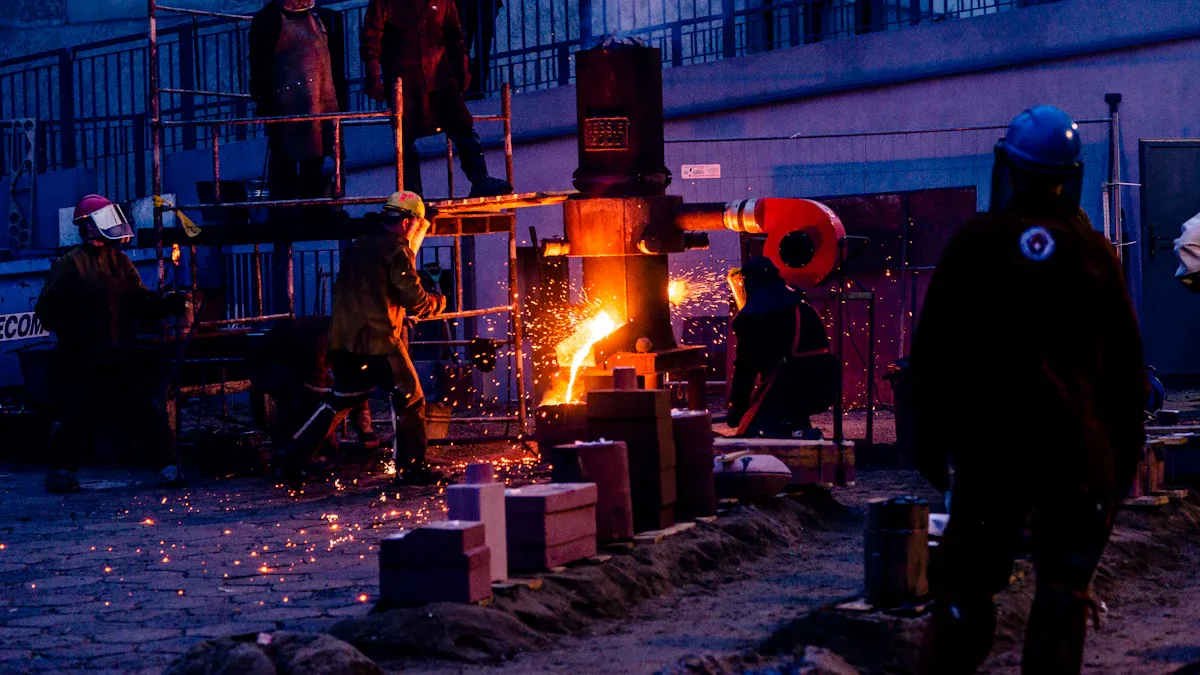
When you look at die casting, you should see how each method works. Both Low Pressure and High Pressure die casting use melted metal and molds. But they fill the mold in different ways. This makes each process special.
Low Pressure Process
Low Pressure die casting uses a soft push to move metal into the mold. The pressure is between 0.7 and 1.5 bar. The metal goes in slowly and smoothly. This helps stop gas bubbles and mistakes. It is good for making strong parts with thick walls. You can use metals like aluminum, copper, and zinc. Machines for Low Pressure casting often use cold-chamber designs. These work well for aluminum and zinc.
Tip: Low Pressure die casting lets you control the metal flow better. You get fewer holes and stronger parts.
Here is a table with the main features:
Features | Low Pressure Die Casting |
|---|---|
Pressure Applied | 0.7 to 1.5 bar |
Fill Rate | Slow and controlled |
Turbulence | Low |
Cycle Time | Moderate |
Wall Thickness | Thicker sections |
Material Compatibility | Aluminum, Copper, Zinc |
Machine Size | Cold-chamber machines |
High Pressure Process
High Pressure die casting uses a strong push to move metal into the mold. The pressure is from 700 to 2500 bar. The metal fills the mold very fast. This helps you make thin and tricky parts. You can use metals like zinc, aluminum, magnesium, and copper. Machines for High Pressure casting use hot-chamber and cold-chamber designs. They are good for making lots of parts.
Here is a table with the main features:
Features | High Pressure Die Casting |
|---|---|
Pressure Applied | 700 to 2500 bar |
Fill Rate | Fast |
Turbulence | High |
Cycle Time | Rapid |
Wall Thickness | Thin-walled parts |
Material Compatibility | Zinc, Aluminum, Magnesium, Copper |
Machine Size | Hot/cold-chamber machines |
New technology helps both processes work better:
Multi-channel temperature control keeps molds steady.
New release agents help you take parts out of molds.
Micro-dosing lets you use release agents just right.
Pick the process that fits your part size, metal, and how many you need.
Features and Capabilities
Material Options
You can choose from several metals for die casting. Aluminum works well for both Low Pressure and high pressure methods. Zinc and magnesium also fit many projects. Copper alloys give you strong parts. Each metal has its own benefits. Aluminum resists rust and weighs less. Zinc makes small, detailed parts. Magnesium is light and strong. Copper alloys handle heat and stress. You should match the metal to your part’s needs.
Tip: Pick a metal that matches your part’s strength and weight needs. This helps you get the best results.
Part Size and Wall Thickness
Die casting lets you make parts in many sizes and shapes. You can create small parts for electronics or large parts for cars. The process also lets you control wall thickness. Thin walls save weight and material. Thick walls add strength. The table below shows the range you can achieve:
Measurement Type | Minimum Value | Maximum Value |
|---|---|---|
Part Weight | 0.017 kg | 12 kg |
Part Size | 17 mm × 4 mm | 300 mm × 650 mm |
Wall Thickness | 0.8 mm | 12.7 mm |
You can make parts as light as 0.017 kg or as heavy as 12 kg. Wall thickness can be as thin as 0.8 mm or as thick as 12.7 mm. This flexibility helps you meet many design needs.
Production Rate
Production speed matters when you need many parts. High pressure die casting works fast. You can make up to 1,000,000 parts each year. Low Pressure die casting makes fewer parts, from 100 to 10,000 units per year. The table below compares the rates:
Casting Method | Production Rate (units/year) |
|---|---|
High Pressure Die Casting | 1,000 to 1,000,000 |
Low Pressure Die Casting | 100 to 10,000 |
If you need a large number of parts, high pressure die casting gives you speed. If you want strong, larger parts and do not need high volume, Low Pressure die casting fits better.
Pros and Cons
Low Pressure Advantages
Low Pressure die casting helps you make parts that fit well. The surfaces are smooth, with roughness as low as 1 to 2.5 micrometers. You can make thin walls, sometimes only 0.75 mm thick. This saves you material. You can add inserts, like threaded parts, while casting. This method means you do not need much extra machining. The parts can be very strong, up to 415 megapascals. This means they can handle more stress. Low Pressure casting works for metals that flow easily and those that do not.
Note: You can make parts fast and waste less. This helps you finish your work on time.
Here is a list of the main advantages:
Advantage | Benefit for You |
|---|---|
High dimensional accuracy | Less finishing work |
Smooth surface finish | Better appearance and function |
Thin wall casting | Lighter parts, less material |
Cast-in inserts | More design options |
Reduced machining | Lower production costs |
High tensile strength | Stronger, more reliable parts |
Low Pressure Limitations
Low Pressure die casting has some problems. The machines and dies cost a lot. This makes starting expensive. You can only use metals that flow well. This limits your choices. The process works best for parts between 30 grams and 10 kilograms. Sometimes, you may see small holes or cracks in the parts. If you need to make your part harder, this method may not work.
High Pressure Advantages
High Pressure die casting helps you make many parts fast. You can make thin and tricky shapes easily. It works well for metals like zinc, aluminum, and magnesium. The surfaces are smooth, so you do not need much extra work. If you need thousands or millions of parts, this method is very quick.
Fast production rates
Good for thin and detailed parts
Works with several metals
Smooth surfaces
High Pressure Limitations
You may see more holes inside your parts. This can make them weaker. The molds and machines cost a lot, especially for big jobs. This process does not work well for very big or thick parts. Sometimes, you need extra steps to fix problems or make parts stronger.
Tip: Always check if your part and how many you need match each process’s strengths.
Applications
Low Pressure Use Cases
Low Pressure die casting is used for many big projects. This method is good when you want parts that are strong and light. Many companies use it to make things weigh less and work better. Car makers use it for wheels and engine blocks. They also use it for suspension parts. Electric cars use this process too. It helps make electric drive parts that must be light and strong. Companies pick this way when parts need to last and handle stress.
Here are some ways Low Pressure die casting is used:
Making vehicles and machines lighter
Parts for electric cars
Motor housings for electric drives
Tip: Pick this process if you want parts that are both strong and light. It gives you good, steady results.
High Pressure Use Cases
High Pressure die casting is best when you need lots of parts fast. It is used in electronics for thin and detailed cases. Toy makers use it for small and tricky shapes. Appliance makers use it for handles and covers. Car makers use it for transmission housings and brackets. It is also used for computer and phone parts.
The table below shows where High Pressure die casting is used:
Industry | Example Parts |
|---|---|
Automotive | Transmission housings, brackets |
Electronics | Device cases, connectors |
Appliances | Handles, frames, covers |
Toys | Small, detailed components |
Note: If you need many parts with fine details, High Pressure die casting is a good choice.
Cost Analysis
Equipment and Tooling
You need to consider equipment and tooling costs before starting die casting. High pressure die casting machines cost more than low pressure machines. The molds for high pressure die casting use stronger materials and need precise machining. This makes them expensive. Low pressure die casting molds cost less, but you still need to invest in quality tooling. If you plan to make many parts, the cost of tooling spreads out over each part. Here is a quick comparison:
Cost Factor | Low Pressure Die Casting | High Pressure Die Casting |
|---|---|---|
Machine Cost | Moderate | High |
Mold Cost | Moderate | Very High |
Tool Life | Long | Shorter |
Tip: If you want to make many parts, high pressure die casting can save money over time. For small batches, low pressure die casting may fit your budget better.
Running Costs
Running costs include energy, maintenance, and labor. Both die casting methods use a lot of energy. The melt-shop uses most of the energy, sometimes up to 77% of total costs. You need to watch energy use closely. Maintenance also affects your budget. Problems like metal loss and high energy use can lead to big financial losses. You should set up good maintenance plans to avoid these issues. High pressure die casting often needs more frequent maintenance because of the stress on machines and molds.
Energy costs are high for both methods.
Maintenance can prevent metal loss and save money.
Good planning helps you avoid unexpected costs.
Per-Part Cost
Per-part cost depends on how many parts you make and how complex they are. High pressure die casting works best for large volumes. You can make thousands or millions of parts, which lowers the cost for each part. Low pressure die casting suits smaller batches. The cost per part is higher, but you get strong and precise parts. If you need thin, detailed parts in large numbers, high pressure die casting gives you the best value. For strong, thick parts in small batches, low pressure die casting is a better choice.
Note: Always match your process to your production needs. This helps you control costs and get the best results.
Quality and Performance
Mechanical Properties
You want strong and reliable parts. Low pressure die casting gives you parts with high strength and good ductility. You can use this process for parts that need to handle heavy loads or stress. High pressure die casting makes parts quickly, but the parts may have lower strength because of tiny air pockets inside. If you need parts that can bend or stretch without breaking, low pressure die casting is a better choice. High pressure die casting works well for parts that do not need to handle much force.
Property | Low Pressure Die Casting | High Pressure Die Casting |
|---|---|---|
Tensile Strength | High | Moderate |
Ductility | Good | Lower |
Porosity | Low | Higher |
Tip: Choose low pressure die casting for parts that need to be strong and last a long time.
Surface Finish
Both die casting methods give you smooth surfaces. You get parts that look good and feel smooth to the touch. The process uses special lubricants to help the metal flow into every part of the mold. This gives you a surface finish that often matches what you get from machining. You do not need much extra work to make the parts look better.
Die casting gives you a high-quality surface finish, often as smooth as machined parts.
Lubricants help the metal flow, so you get a defect-free surface.
You can paint or coat these parts easily. This helps you save time and money on finishing steps.
Defect Rates
You want as few defects as possible. Low pressure die casting usually has fewer defects because the metal flows slowly and smoothly. This reduces the chance of air getting trapped inside. High pressure die casting fills the mold fast, which can trap air and cause small holes or weak spots. You may see more defects with high pressure die casting, especially if you make very thin or complex parts.
Note: Always check your parts for defects before using them. Good quality control helps you catch problems early.
Decision Criteria
Project Fit
You need to match the die casting process to your project needs. Start by looking at your part’s geometry. Complex shapes with undercuts or thin walls often fit high pressure die casting. Large parts with thick walls work better with low pressure die casting. You should also check the material properties. Some alloys need special handling. Aluminum and magnesium suit both processes, but copper alloys often need low pressure casting.
Production data helps you decide. If you want thousands of parts each year, high pressure die casting gives you speed. For smaller batches, low pressure die casting offers better control. You must also think about the parting line. The parting line affects how you design the mold and how the part comes out. You need to choose the right direction for the parting line. This helps you avoid problems with undercuts and protrusions.
Gating system design matters too. Gates, runners, and overflow passages guide the molten metal. Good design helps you get strong parts with fewer defects. You should work with your team to pick the best layout for your project.
Here is a table to help you match your project to the right process:
Criteria | Description |
|---|---|
Part Geometry | Influences the selection of parting lines and cavity layouts. |
Material Properties | Affects the choice of die-casting alloys and die material properties. |
Production Data | Determines the design of gating systems and overall die design methodology. |
Parting Line Selection | Based on factors like dimensional stability and draw distance, considering core-cavity surfaces. |
Gating System Design | Involves the design of elements such as gates, runners, and overflow passages for molten metal. |
Tip: Always review your part’s shape, size, and material before choosing a die casting process. This helps you avoid costly mistakes.
Trade-Offs
You must weigh several trade-offs when picking a die casting process. Cost is a big factor. High pressure die casting costs more at the start, but you save money if you make many parts. Low pressure die casting costs less for small batches, but each part may cost more.
Quality matters too. Low pressure die casting gives you strong parts with fewer holes. High pressure die casting makes parts fast, but you may see more defects. You need to decide if speed or strength is more important for your project.
Volume affects your choice. High pressure die casting suits large production runs. Low pressure die casting fits smaller runs. You should also think about heat treatment. Some parts need extra steps to get the right hardness or strength. Low pressure die casting often works better for parts that need heat treatment.
Here is a list to help you compare the trade-offs:
High pressure die casting gives you speed and lower per-part cost for big jobs.
Low pressure die casting offers better strength and fewer defects for small batches.
High pressure die casting suits thin, complex shapes.
Low pressure die casting fits thick, strong parts.
Heat treatment works better with low pressure die casting.
Note: You need to balance cost, quality, volume, and heat treatment needs. Pick the process that matches your project goals.
You need to pick low pressure or high pressure die casting. Think about what your project needs. Low pressure works well for strong and thick parts. It is best when you only need a few parts. High pressure is good for thin and tricky shapes. It is better when you need many parts. Check your part size, what metal you use, and how many you want to make before you choose.
Pick low pressure if you want tough parts with fewer mistakes.
Pick high pressure if you want to make lots of parts quickly.
Tip: Make sure your casting choice matches your project and business needs. This helps you get the best results.
FAQ
What is the main difference between low pressure and high pressure die casting?
You use low pressure die casting for strong, thick parts. High pressure die casting works best for thin, complex shapes. The main difference is the amount of pressure used to fill the mold.
Can you use both processes for the same metal alloys?
You can use aluminum and zinc in both processes. Magnesium fits high pressure best. Copper alloys work better with low pressure. Always check the alloy’s flow and strength needs before you choose.
Which process gives you better surface finish?
High pressure die casting usually gives you a smoother surface. You get parts that need little extra finishing. Low pressure also gives a good finish, but it works best for thicker parts.
How do you decide which process to use for your project?
You should look at your part’s size, shape, and how many you need. If you want many thin parts, pick high pressure. For strong, thick parts in small batches, choose low pressure.
See Also
Choosing Optimal Closing Force for Die Casting Products
Comparing Aluminium and Magnesium for Lightweight Die Casting
Effects of Thermal Stress on Die Casting Components
Advantages of CAE Analysis in Die Casting Development
Key Factors Affecting Die Cast Mold Pricing
About Hunan Puka

Established in 2016 and based in Hunan, China, with a liaison point in Berlin, we are a Tier 2 supplier for the automobile industry. We specialize in the production of customized aluminum die-casting parts designed for machines with a closing force ranging from 280 to 1250 tons, with subsequent manufacturing process CNC machining and surface treatment. Our commitment to quality is reflected in our accredited quality management system, certified by ISO9001:2015 and IATF16949:2016 standards.