From Conventional Die Casting to Gigacasting, The Key Factory Changes

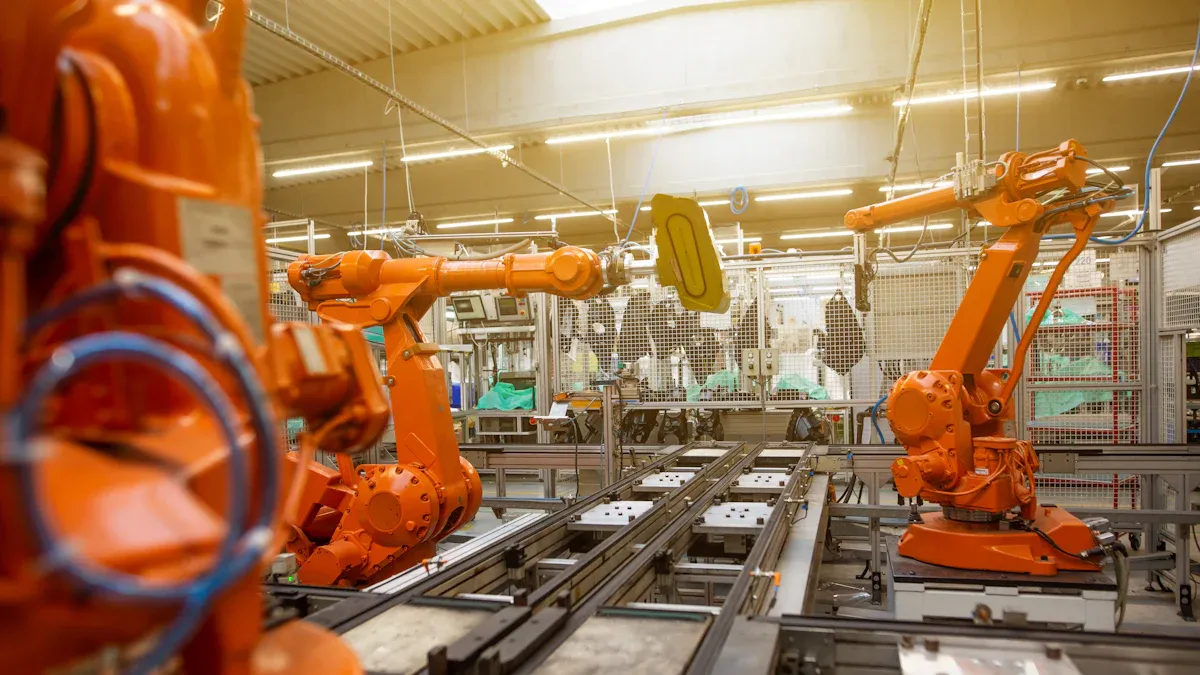
The move to Gigacasting changes five different parts of a factory. Equipment jumps to machines over 6,000 tons, with dies that weigh more than 50,000 kg. The process shifts from 70–85 stamped parts to one single casting, adding new alloys and vacuum systems. The layout redesigns floor space and automation for giant presses. Operations retrains workers for new tooling and maintenance. Economics moves capital from welding lines to massive machines.
Each area forces a rethink of the factory floor. Equipment needs larger support systems. The process needs new melt handling. The layout needs stronger floors. Operations needs new skills. Economics needs higher initial investment.
Here is what actually changes on the factory floor.
Gigacasting Equipment Changes
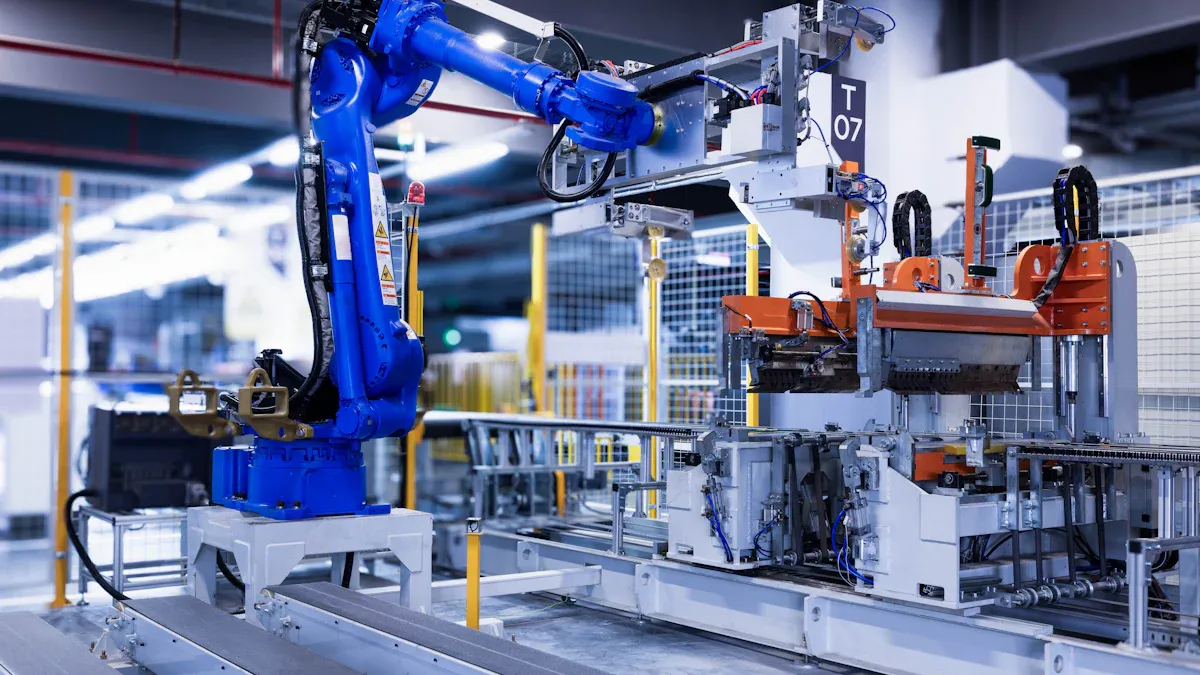
Larger Machines, Higher Forces
Switching from regular die casting to gigacasting begins with the machine. Old die casting machines usually give 1,000 to 3,000 tons of clamping force. Gigacasting machines go past 6,000 tons. This is a big jump, not a small one. It changes what the equipment can make and how factories must support it.
IDRA brought out the Giga Press series in late 2018. Tesla used a custom OL 6100 CS starting in late 2020. IDRA also shared news of an order for a 5,500-tonne high-pressure die casting machine. LK Group made the Impress-Plus DCC6000 for Tesla's Giga Shanghai, ready by October 2020. These machines show the top clamping force you can get today.
Model | Clamping force (kN) | Clamping force (tons) |
|---|---|---|
OL 5500 CS | 55,000 | 5,607 |
OL 6200 CS | 61,000 | 6,218 |
The OL 6200 CS has the most clamping force of the IDRA models listed, at 61,000 kN, or 6,218 tons. This force is needed to hold huge dies shut while the metal is pushed in. Giga casting dies can weigh over 50,000 kg. Their inserts and parts are bigger than normal die casting tools. A die this big needs a machine frame that can take the weight and force without bending.
Factories must also update cranes, foundations, and safety systems to handle these loads. The equipment change spreads through the whole plant setup.
Auxiliary Equipment Upgrades
The main machine is only one part of the equipment story. Gigacasting needs auxiliary systems that regular die casting does not need at this size. Super vacuum systems pull air out of the die cavity before injection. This step cuts down porosity in the big casting. Argon injection helps control the air inside the die. Special die coatings guard the tooling surface from the harsh heat and stress of each cycle.
These upgrades work as a team. The vacuum system removes gas. The argon injection pushes out leftover reactive gases. The die coating makes tool life longer. Without these systems, one large casting would probably fail from porosity or surface flaws.
The auxiliary equipment also needs more watching. Sensors track vacuum pressure, argon flow, and die temperature in real time. Operators check these readings on control panels. Any drift from the set parameters sets off an alarm. The factory must keep spare parts for these systems because downtime on a gigacasting machine costs far more than on a regular machine.
Gigacasting Process Shifts
The process change takes the factory into new territory. This method still follows the same basic high-pressure die casting rules as regular casting. But the size pushes those rules way past normal limits. A factory that once stamped and welded many panels now pours one big aluminum structure in a single shot.
Single-Piece vs. Multi-Part
A normal car rear end may have 70–85 stamped parts spot welded together. A giga-cast aluminum rear end replaces all those parts with one big casting. You can see the difference clearly when you compare real platforms:
Platform | Conventional approach | Large-format approach |
|---|---|---|
Tesla Model Y rear structure | ~70 individual components | 1 single-piece aluminum casting |
Toyota upcoming platform | — | 177 components consolidated across front and rear castings |
Volvo planned consolidation | — | 100 parts merged into a single cast floor section |
This merging removes hundreds of welds and makes the production line shorter. The repair costs change just as much. A two-year Thatcham Research study compared Tesla Model Y cars with single-piece aluminum rear structures against normal multi-piece steel cars. Insurer data and the Allianz Centre for Technology in Germany backed the research. Partial replacements cost on average £2,167 less than the Model 3's traditional steel subframe. Full replacements cost £519 less than similar conventional repairs. Crash testing showed that low-severity impacts (15 km/h) caused no structural damage. Medium-severity impacts (25 km/h) needed full casting replacement at a £716 component cost, a price that stayed competitive.
Thatcham Research said that mega cast technology, when backed by detailed repair guidelines, brings major benefits for insurers, consumers, and the environment. These findings have effects for the factory floor. Giga-cast parts need special aluminum welding facilities. Their large irregular shapes make logistics more complex. Quality control also changes: one bad shot turns an entire rear structure into scrap.
Alloy and Melt Handling
Large structural castings ask more of the metal than small parts do. Aluminum alloys must give strength like welded steel assemblies while filling huge die cavities completely. Composition and melt quality must stay the same shot after shot. A finished part can fail under load if they don't. Alloy development plays a key role in making gigacasting work for structural applications.
Melt handling becomes a bigger operation. Conventional die casting cells melt aluminum in small furnaces near the machine. This approach uses far more melt volume because each shot fills a die the size of a complete vehicle floor structure. Factories must deliver filtered and degassed melt at the right temperature across long production runs. Any interruption stops the entire line.
Vacuum systems become essential. Super vacuum systems pull air from the die cavity before injection. This step stops porosity that would weaken the casting. Argon injection clears out remaining reactive gases. These systems run in sync with the injection sequence. Any deviation creates scrap. The foundry must also remove oxides and control hydrogen content in the melt because a large casting has no second chance.
Tooling costs rise a lot for a single large-format die-cast part compared with conventional multi-part tooling. The economics work only at very high vehicle volumes per model per year. Those volumes deliver potential savings up to 40 percent.
Factory Layout and Infrastructure
Space and Floor Strength
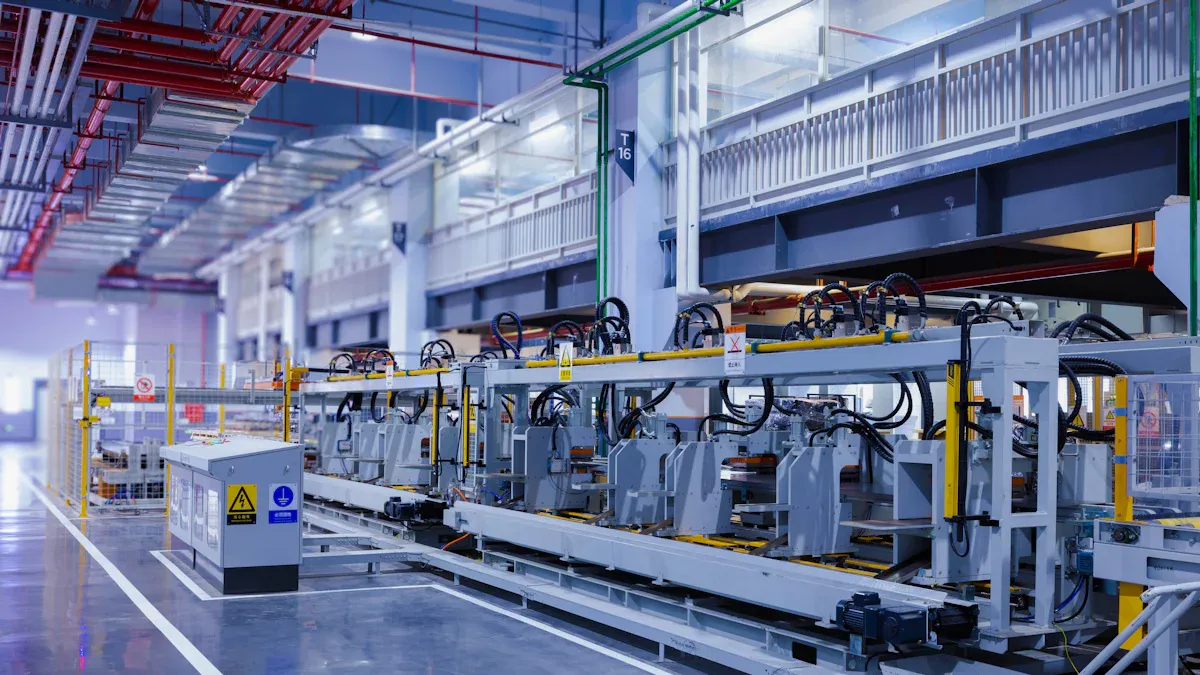
A gigacasting machine needs much more room than a regular die casting cell. The machine is bigger, and the space around it must hold huge dies and the equipment that moves them. A TUM expert says gigacasting takes up a lot of factory floor space. This space includes the machine, the melt delivery system, the vacuum pumps, and the cooling lines.
Floor strength is just as important. A die that weighs up to 100 tonnes needs a foundation that can hold that weight without sinking. The building must also support overhead cranes for vertical die changes. In large press plants, workers move dies in and out sideways. Gigacasting flips that pattern. Crews must lift dies straight up with a crane, which changes the ceiling height and the bay design.
Die change time adds another layout problem. A die that weighs up to 100 tonnes can take 10–12 hours to change. A press tool change takes about 3 minutes. That gap forces factories to plan long changeover windows and keep spare dies ready. Only one part comes off each gigacasting machine, so the layout cannot depend on parallel output from a single unit.
Automation and Material Flow
Automation must match the size of the machine. Robots handle the large casting after it comes out because the part is too heavy and too hot for people to move. Conveyors and automated guided vehicles move the casting to trimming, x-ray inspection, and machining stations. The flow must stay tight because one bad shot scraps a whole structure.
Material flow also changes on the input side. Melt must reach the machine in the right amount and at the right temperature for every shot. The furnace, degassing unit, and launder system sit close to the press to cut travel time. Any delay in melt delivery stops the whole line. Factories that plan these flows early avoid bottlenecks later.
Operations and Workforce
Training and Skill Shifts
Gigacasting changes the operator's job. A worker no longer handles dozens of stamped parts. The worker now runs one massive machine. The control panel displays different data. Operators must read vacuum pressure, die temperature, and injection curves. A mistake scraps an entire vehicle structure.
Training covers new skills. Engineers study large-die behavior, alloy flow, and vacuum system tuning. Maintenance teams learn to handle dies weighing more than 50,000 kg. Welders retrain for aluminum repair on thick castings. Quality staff interpret x-ray images of large structural parts. A traditional operator cannot step into this cell without months of preparation.
Maintenance and Downtime
Maintenance becomes the biggest operational challenge. Large dies multiply cooling circuits and sealing points. Schaufler engineers report needing three to four times as many circuits as before. More circuits mean more drilled holes and more sealing elements. Each element adds a place where failure can start.
Leaks are the main driver of unplanned downtime. A single die can contain up to 150 plugs, meaning 150 potential leak points. Leaks appear at connecting threads, at cracks between the die and a cooling channel, or at sealing plugs. External thread leaks are easy to fix. Cracks between the die and a cooling channel are less frequent but cut Overall Equipment Effectiveness sharply.
Repairing leaks takes significant time. Freeze-fit plugs require cooling to -196 °C with liquid nitrogen. The die insert must heat to 350 °C. A cavity insert with 15 openings takes around 400 minutes for freeze-fit plug installation and rework. An alternative plug system finishes the same job in 48 to 50 minutes. The time difference matters because the machine produces just one part per cycle.
Micro spray adds another maintenance layer. Water-based spray causes thermal fatigue cracking. That cracking can reach cooling channels. Corrosion in cooling channels comes from free carbonic acid in softened water. Mega and giga casting trends multiply these risks. Factories must schedule maintenance windows around known weak points. Downtime on this line costs far more than downtime on a conventional line.
Economic and Production Impact
Cost and Capital Investment
Gigacasting moves money toward huge machines and dies. One machine costs much more than a regular die casting cell. The die alone can weigh over 50,000 kg, and tooling costs jump for one large part. Factories only get this money back at very high vehicle volumes per model per year. The possible payoff is big. Removing the welding of dozens of body parts can cut per-unit manufacturing costs.
Production data shows how big the savings are. Zeekr reported a 60% rise in production efficiency after using the process. It removed 80 components and about 800 welding points. It also got a 16% weight reduction, 16% less deformation, and 11% higher bending stiffness. NIO merged 54 parts into one for its ET5 model using a machine with 9,700 short tons of clamping force. These results show the economics work best when factories combine many parts into one.
The move toward electric drivetrains has pushed foundries to use this method. Electric vehicles need fewer parts than combustion drivetrains. This makes large single-piece castings more appealing. In automotive production, giga-cast aluminum structural parts are joined with regular car parts. This shows a hybrid approach rather than full replacement.
Efficiency and Cycle Time
Less assembly time is one of the clearest efficiency gains. A giga-cast component replaces many separate parts. Fewer parts need to be joined and fastened. Workers spend less time on assembly. This directly boosts production throughput and cuts factory cycle time.
The process also speeds up production and greatly increases material efficiency. It allows far-reaching cost cuts along the value chain. Factories see lower production, joining, and logistics costs. Combining components into one shortens assembly times. It also cuts possible sources of error. Precise simulations lower failure risk and reduce costly rework. These gains build up across the whole plant. A shorter line needs less space, less labor, and less inventory. Factories that plan early get the full benefit.
Gigacasting is not just one machine upgrade. Five areas of a factory change at once. Equipment jumps to presses above 6,000 tons. Dies can weigh over 50,000 kg. A single casting replaces 70 to 85 stamped parts. Layout adds stronger floors and new automation. Operations retrains workers and expands maintenance. Economics shifts money from welding lines to giant presses.
Equipment and layout rank as the most important changes. Workforce and maintenance are the most overlooked parts. Factories that plan early for these changes gain extra efficiency. Treating the switch as a simple swap will cause struggle. A whole-factory plan turns this change into a competitive edge.
FAQ
What clamping force do gigacasting machines need?
Gigacasting machines use more than 6,000 tons of clamping force. Regular die casting machines usually use 1,000 to 3,000 tons. The IDRA OL 6200 CS gives 61,000 kN, or 6,218 tons. This force keeps huge dies shut while metal is pushed in.
How long does a gigacasting die change take?
A die that weighs up to 100 tonnes can take 10–12 hours to change. A normal press tool change takes about 3 minutes. This big gap makes factories plan long changeover windows and keep spare dies ready.
Why do gigacasting dies need so much maintenance?
Large dies add more cooling circuits and sealing points. Schaufler engineers say they need three to four times as many circuits as before. One die can hold up to 150 plugs, which means 150 possible leak points. Leaks are the main cause of unplanned downtime.
What production savings does gigacasting deliver?
Zeekr reported a 60% rise in production efficiency after using the process. It removed 80 components and about 800 welding points. NIO merged 54 parts into one for its ET5 model. These gains work best at very high vehicle volumes per model per year.
Does gigacasting replace all conventional parts?
No. In car production, giga-cast aluminum structural parts are joined with regular car parts. This shows a hybrid manufacturing approach rather than full replacement. The shift toward electric drivetrains, which need fewer parts, has pushed foundries to adopt gigacasting.
See Also
Determining Optimal Die Casting Closing Force For Your Product Success
Understanding Functional Testing Within CNC And Die Casting Operations
Achieving Net Shape Through The Die Casting Manufacturing Process
A Complete Step By Step Guide For Die Casting CAD
Implementing Effective Waste Sorting Methods In Die Casting Factories
About Hunan Puka

Established in 2016 and based in Hunan, China, with a liaison point in Berlin, we are a Tier 2 supplier for the automobile industry. We specialize in the production of customized aluminum die-casting parts designed for machines with a closing force ranging from 280 to 1250 tons, with subsequent manufacturing process CNC machining and surface treatment. Our commitment to quality is reflected in our accredited quality management system, certified by ISO9001:2015 and IATF16949:2016 standards.