What is flexural forming and how does it work in engineering

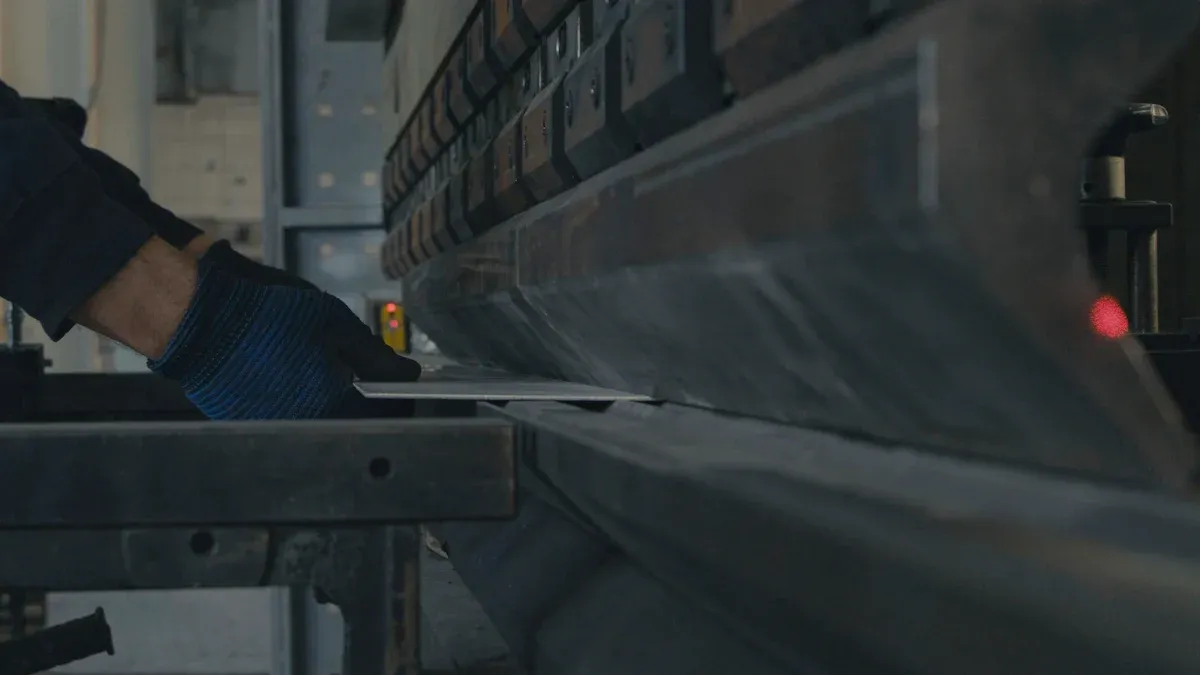
You see flexural forming when a metal bar bends into a curve or a plastic sheet turns into a wave. Flexural forming is when you shape things by bending them, but they do not break. People use flexural forming to make parts that are strong and helpful. Flexural forming lets you pick the best material because each one bends in its own way. Flexural strength shows how much force a material can take before it breaks. Think about bending a ruler until it almost snaps; that is flexural forming happening. Flexural forming helps you control shapes in engineering.
Flexural forming basics
What is flexural forming
Flexural forming happens when you bend something to make a new shape. The material changes shape but does not break. You can see flexural forming in curved beams and wavy panels. The main idea is to use force so the material bends and stays strong. You control the shape by choosing how much force to use and where to put it. Flexural forming helps you make parts that fit special designs in engineering.
Flexural behavior and strength
Flexural behavior shows how a material acts when you bend it. Some materials bend easily. Others are harder to bend. You need to know how much force a material can take before it breaks. This is called flexural strength. You measure flexural strength with special tests. Two common tests are three-point bending and four-point bending. In three-point bending, a machine pushes down on the middle of a sample. It keeps pushing until the sample bends or breaks. In four-point bending, the machine pushes at two spots near the center. These tests help you find out if a material is strong enough for your project.
Method | Description |
|---|---|
Three-Point Bending | A flexural test machine pushes harder and harder on the sample until it bends or breaks. |
Four-Point Bending | The machine pushes at two spots at the same time near the center of the sample. |
You use flexural strength numbers to compare materials. Metals usually have higher flexural strength than plastics. You pick the right material by looking at these numbers. Flexural strength helps you make safe and reliable parts.
Tip: Always check flexural strength before you pick a material for bending. This keeps your design safe and strong.
Why flexural forming matters in engineering
Flexural forming is important because you need to shape materials for many engineering projects. You build bridges, cars, and machines with parts that must bend but not break. Flexural strength tells you how much force a part can handle. You use flexural forming to make parts that fit together and work well. When you understand flexural behavior, you avoid mistakes and make better choices. You save time and money by picking the right material. Flexural forming lets you make strong, useful shapes for many engineering needs.
Flexural forming process in engineering
Step-by-step process
You can follow a clear process to shape materials using flexural forming. First, you select the material you want to bend. Next, you measure and cut the material to the right size. Then, you place the material on a support, like a die or a mold. You apply force at certain points to bend the material. The amount and location of the force decide the final shape. After bending, you check the part for accuracy and quality. If the shape is not right, you can adjust the force or the position and try again.
Process parameters play a big role in how well your parts turn out. The design of the die helps you avoid problems like unwanted bends or springback, which is when the material tries to return to its original shape. You need to control the first samples carefully to make sure your tools work as planned. Keeping the process stable over time helps you get the same results every time. This makes your products consistent and reliable.
Tip: Always test a few samples before making many parts. This helps you catch mistakes early and save materials.
Materials and equipment
You can use many materials for flexural forming. Metals like steel and aluminum bend well and stay strong. Plastics and composites also work, but they may need less force. The choice depends on what you want your part to do.
Here are some common tools and equipment you might use:
Dies and molds: These give the material its new shape.
Presses: These machines push down on the material to bend it.
Rollers: These help form curves and waves.
Measuring tools: These check if the part matches your design.
You often use a flexural test to see how much force a material can take before it breaks. The three-point bending test and the four-point bending test are popular ways to measure this. These tests help you pick the right material and tool settings for your project.
Equipment | Purpose |
|---|---|
Die/Mold | Shapes the material |
Press | Applies bending force |
Roller | Forms curves and waves |
Measuring Tools | Checks size and accuracy |
Flexural cracks and failure modes
When you bend a material, you need to watch for cracks and other signs of failure. Cracks often start on the side that stretches the most. If you use too much force or pick the wrong material, the part can break. Sometimes, small cracks appear first. These can grow bigger if you keep bending the part.
You can prevent cracks by choosing the right material and using the correct amount of force. Testing helps you find the limits of your material. If you see cracks during a flexural test, you know the part cannot handle more force. In engineering, you want to avoid failure by understanding how and why cracks form. This helps you design safer and stronger parts.
Note: Always inspect your parts after bending. Early cracks can lead to bigger problems later.
Applications and flexural strength in additive manufacturing
Engineering applications of flexural forming
Flexural forming is used in many engineering jobs. In construction, workers make curved beams and arches for bridges and buildings. Car makers use flexural forming to shape car panels and frames. Aerospace engineers use it to make airplane parts that are light and strong. People also use flexural forming for furniture, sports gear, and electronics. These uses show that bending and shaping materials is important for making strong parts.
Flexural strength in additive manufacturing
Additive manufacturing is also called 3D printing. It builds parts one layer at a time. When you design a part for 3D printing, you must think about bending forces. Flexural strength in additive manufacturing means how much bending a printed part can take before it breaks. This is important for things like brackets, beams, and supports. If you know the flexural strength, you can pick the best material and design. In cars and airplanes, parts must handle stress without breaking. Knowing flexural strength helps you make sure your parts are safe and work well.
Flexural strength helps you pick the best material for your 3D printed part.
You can design parts that last longer and work better.
Stronger parts mean fewer breaks and safer products.
Tip: Always test your 3D printed parts for flexural strength before using them in real projects.
Benefits and limitations
Flexural forming and additive manufacturing have many good points. You can make shapes that are hard to make with other ways. You can use less material and still get strong parts. This saves money and makes less waste. You can also make custom parts fast.
But there are some problems too. Not all materials bend well. Some may crack or break if you use too much force. Additive manufacturing can sometimes leave small gaps or weak spots in a part. You need to test your parts to make sure they are strong enough.
Benefit | Limitation |
|---|---|
Complex shapes | Some materials may crack |
Less material needed | Possible weak spots |
Fast customization | Testing is important |
Note: Always check your design and material before making many parts. This helps you avoid problems and build better products.
Flexural forming bends materials so they do not break. This helps you make strong parts for many projects. If you know flexural strength, you can choose the best material. You can stop parts from breaking.
You can make safer things.
You can fix real problems at school or work.
Remember: If you know how materials bend, you can do better in engineering and design.
FAQ
What is the difference between flexural strength and tensile strength?
Flexural strength tells you how much bending a material can take before it breaks. Tensile strength shows how much pulling a material can handle. You use flexural strength for bending tests and tensile strength for stretching tests.
Can you use flexural forming with all materials?
You cannot use flexural forming with every material. Some materials, like glass, break easily when you bend them. Metals and plastics usually work better because they can bend without cracking.
Why do engineers test for flexural cracks?
You test for flexural cracks to find weak spots in your design. Cracks show where a part might fail. If you see cracks early, you can fix the problem before using the part in real life.
How do you measure flexural strength?
You measure flexural strength with a bending test. You place a sample on supports and push down in the middle. The test shows how much force the sample can take before it bends or breaks.
See Also
Essential Insights Into Friction Stir Welding Machines And Applications
Understanding Jigs And Fixtures In Manufacturing Operations
Cavity Molds: Their Functionality And Role In Manufacturing
Understanding The Processes Of Aluminum Extrusion And Die Casting
Exploring Functional Testing In CNC And Die Casting Techniques
About Hunan Puka

Established in 2016 and based in Hunan, China, with a liaison point in Berlin, we are a Tier 2 supplier for the automobile industry. We specialize in the production of customized aluminum die-casting parts designed for machines with a closing force ranging from 280 to 1250 tons, with subsequent manufacturing process CNC machining and surface treatment. Our commitment to quality is reflected in our accredited quality management system, certified by ISO9001:2015 and IATF16949:2016 standards.