Common defects in CNC machining and how to avoid them

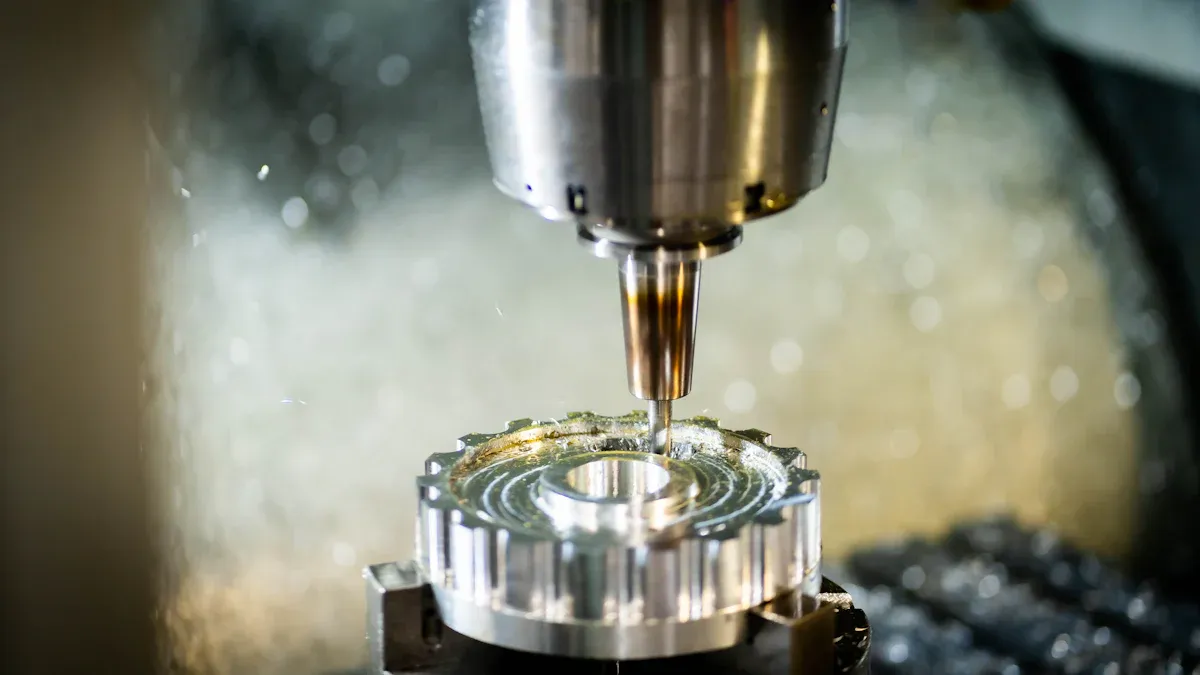
High-precision manufacturing needs perfect parts. Yet, quality issues often mess up your work. You can find and fix common CNC machining defects. Just make quick changes on the shop floor:
Surface Roughness: Drive cutting speeds faster. Adjust feed rates to stop material marks.
Dimensional Drift: Fix tool offsets again. Manage heat expansion.
Tool Chatter: Make your setup stiffer. Change spindle speeds to stop bad vibrations.
Edge Burrs: Pick sharp cutter shapes. Change how the tool leaves the path.
Thermal Warp: Use better flood coolant. This controls heat buildup.
Tool Breakage: Lower heavy physical loads. Swap out worn inserts fast.
Preventing Surface Defects in CNC Machining
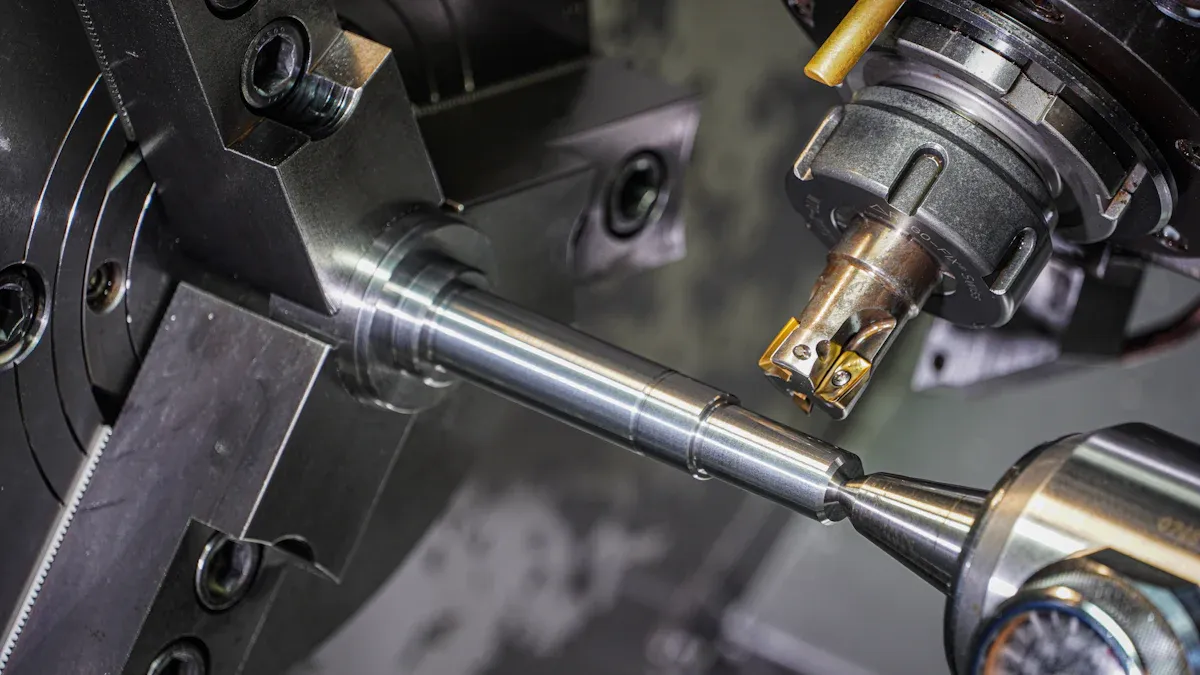
Fix surface defects early for high quality. Bad choices cause visible tool marks. They lead to rough finishes. You also get high scrap rates.
Causes of Rough Surfaces and Tool Marks
Tool marks show up easily. Strong forces push cutters away. Material sticks to the edge. This forms Built-Up Edge (BUE). BUE ruins your workpiece finish. You can stop BUE. Just pick correct insert geometry parameters.
Tool Parameter | Optimal Adjustment Value |
|---|---|
Insert Nose Radius | 1 mm |
Rake Angle | -15° (Negative) |
Good tool geometry helps a lot. It expands the contact area. It makes cutting action stable.
Material Scarring From Inadequate Cutting Speeds
Slow speeds cause bad friction. Heat stays on the metal. The surface gets too soft. Chips do not shear cleanly. Trapped heat scars the material. It ruins the surface integrity. Boost cutting speeds right away. This step cuts contact time. Chips flush the heat away.
Speed and Feed Rate Adjustments
Match your speeds and feeds. This helps reach accurate standards. You can meet roughness requirements.
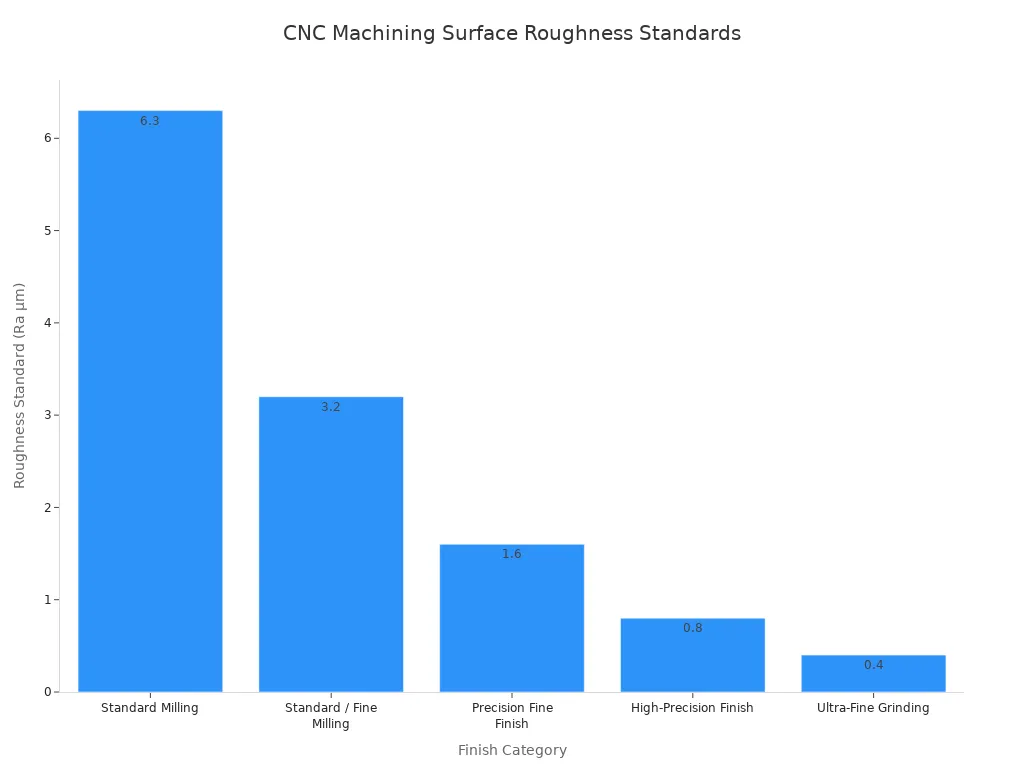
Finish Category | Roughness Standard (Ra µm) | Typical Engineering Applications |
|---|---|---|
Standard Milling | 6.3 | Simple support structures, basic brackets, and general parts |
Standard / Fine Milling | 3.2 | Fitting interfaces, sliding surfaces, and standard machine parts |
Precision Fine Finish | 1.6 | Accurate linear guides, alignment rails, and visible parts |
High-Precision Finish | 0.8 | Smooth bearing seats, optical mounts, and sliding contacts |
Ultra-Fine Grinding | 0.4 | Precise optical parts, shiny electrical pads, and smooth interfaces |
Tip: Use higher spindle speeds. Combine them with lower feed rates. This creates smooth surface profiles. It helps precision CNC machining jobs.
Dimensional Inaccuracies and Tolerance Errors
Exact sizes matter in top manufacturing. Small errors ruin costly parts fast. Heat and physical stress alter sizes. Control them to keep tight sizes.
Workpiece Deflection and Fixture Instability
Heavy cutting force shifts your part. Part bending hurts thin parts badly. Their weak shape bends under force. It happens during active cutting jobs. This shaky setup ruins tool contact. You get warped, bad parts.
Tip: Use strong hydraulic clamps today. Add backer plates for thin parts.
Thermal Expansion of Tools and Workpieces
Fast cutting friction makes big heat. Warm metal grows bigger quickly. Tools stretch out under heat. Parts change size, too. Hot parts shrink when cool. This change ruins tight sizes.
Element | Thermal Behavior | Prevention Strategy |
|---|---|---|
Workpiece | Grows bigger from friction | Constant cool fluid bath |
Cutting Tool | Grows longer down Z-axis | Heat growth fix cycles |
Spray cool fluid on parts. Keep machine rooms very cool.
Tool Wear Compensation and Calibration
Sharp edges dull over time. Friction slowly wears hard metal. Smart tools stop size changes:
Dynamic Adjustments: Systems fix tool sizes fast. They reset zeros for heat.
In-Cycle Corrections: Probes check tool size often. They fix sizes before cuts.
Smart Monitoring: Machines check tool sizes automatically. G31 code checks wear trends. It finds worn tools fast.
Fixing these settings keeps CNC machining right.
Mitigating Tool Chatter and Machine Vibration
Uncontrolled machine vibration ruins surface finishes fast. Tool chatter leaves wave-like marks on parts. Stop chatter to save tools and machines.
Root Causes of Harmonic Chatter Marks
Force matches your machine frequency. Chatter starts. The cutting tool bounces on parts. This continuous bouncing creates unwanted harmonic resonance.
[Tool Instability] -> [Vibration Resonance] -> [Chatter Marks on Surface]
Long tool overhang makes setups bend. Thin wall sections also increase vibration.
Speed Overrides and Depth of Cut Adjustments
Disrupt wave patterns to stop chatter fast. Change cutting settings on the control panel.
Adjustment Type | Action | Direct Benefit |
|---|---|---|
Spindle Speed | Shift speed up or down 10-15% | Breaks harmonic resonance waves |
Axial Depth (DOC) | Cut depth back by 25-50% | Lowers radial cutting force |
Feed Rate | Raise the chip load a bit | Stabilizes tool pressure against part |
Lower depth reduces spindle force. Higher feed keeps tools firmly engaged.
Tip: Adjust spindle speed during cuts. Listen for the quietest machine tone.
Variable Pitch Tooling and Setup Rigidity
Standard end mills have equal flute spacing. Equal spacing creates uniform vibration pulses. Try variable pitch end mills instead. Unequal flute spacing breaks rhythm patterns easily. It kills vibration resonance.
Make setups stiff to stop bad bending:
Choose the shortest tool overhang length.
Mount tool holders inside rigid hydraulic chucks.
Clamp workpieces close to support structures.
Stiff machine setups absorb shock forces well. You get smooth parts and longer tool life.
Eliminating Burrs and Sharp Edges
Bad burrs ruin quality issues. They create real safety risks. You must remove sharp metal edges. This helps deliver clean, safe parts.
Mechanism of Exit Burr Formation
Burrs form when cutting tools push metal. The tool fails to cut cleanly. High pressure bends soft metal edges. Metal bends out at part edges. Support falls away right before tools exit.
[Insert Pressure] -> [Metal Bends Outward] -> [Exit Burr Forms]
Dull tools push metal much harder. They make very big burrs.
Tool Path Optimization and Chamfer Strategies
You can control edge finish easily. Smart code programming helps a lot. Change tool paths very carefully. This stops burrs on outer edges:
Down-Milling/Climb Milling: Use climb milling methods now. This step helps exit cuts.
Exit Path Adjustment: Change tool paths for clean exits. Tools leave part edges smoothly.
Secondary Finishing Pass: Run a quick light pass. Do this right after roughing. It removes burrs from edges.
Chamfer Strategy | Tooling Used | Main Operational Advantage |
|---|---|---|
In-Process Chamfering | 45° Chamfer Mill | Removes sharp corners automatically inside the CNC cycle |
Deburring Pass | Corner Rounding Cutter | Produces smooth, consistent radius edges across complex contours |
Sharp Edge Maintenance and Cutter Selection
Good tool choices stop edge defects. Pick tools before cutting starts. Use sharp positive-rake inserts for metal. They cut aluminum and stainless steel. Sharp shapes cut metal very smoothly. They lower bad edge bends.
Tip: Replace dull end mills fast. Sharp edges cut metal clean. They stop burrs completely now.
Keep extra deburring tools inside machines. Automatic chamfer tools stop hand work. They save shop time today.
Tool Wear and Breakage in CNC Machining
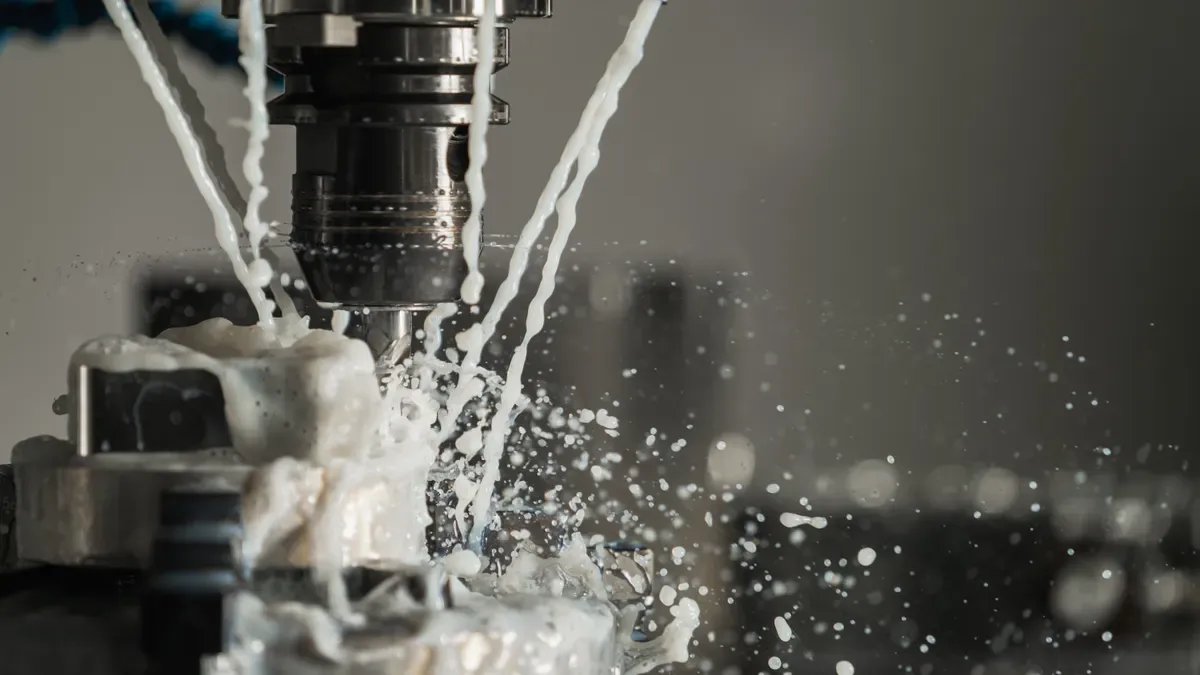
Old tools ruin part sizes. Bad tools stop work fast. Manage force and heat to save tools.
Carbide Tool Fracture and Flank Wear
Heavy forces break hard carbide inserts. Fast friction wears tool sides down. Force spikes chip sharp corners. Pick tough tools to stop breaks. Lower side cutting force now.
Preventing Built-Up Edge Formation
Soft metal sticks to warm tools. This forms Built-Up Edge defects. Use fast speeds to stop BUE. Try shiny tool covers, too.
Spindle Speed Baseline: 10,000 to 12,000 RPM
Feed Rate Baseline: 0.005 to 0.010 inches per tooth
Depth of Cut Baseline: 0.100 to 0.150 inches
Category | Recommended Parameter | Purpose / Effect |
|---|---|---|
Cutting Speed ($V_c$) | 300–1,000 m/min | Fits fast cuts on 6xxx aluminum |
Coolant Method | Emulsion or air spray | Stops metal sticks and moves chips |
Tool Coating | Bare or Diamond-coated | Lowers metal sticking and heat friction |
High-Pressure Coolant and Thermal Shock Control
Bad fluid flow causes heat shifts. Cold liquid cracks hot tools. Aim coolant at the cut area. Steady spray stops heat shifts. It blasts chips away well. 🛠️
Tip: Keep fluid spray steady during deep cuts. This stops bad heat cracks.
Thermal Distortion and Workpiece Warping
Heat bends metal parts during cuts. Material warping ruins quality issues. It creates costly scrap. Manage heat and tension well. This stops thermal distortion.
Heat Generation and Chip Evacuation
High friction makes big heat. Hot chips hold this heat. Clear chips away instantly. Trapped chips warm the metal. Warm metal expands during cuts.
[Tool Friction] -> [Hot Chips Accumulate] -> [Heat Soaks Workpiece] -> [Part Warps]
Use high-pressure flood coolant now. Blast chips out fast. This keeps parts cool.
Residual Stress and Internal Material Tension
Raw stock holds inner stress. Cuts remove outer metal layers. This action releases locked stress. The metal bends to balance forces.
Material Condition | Warping Risk | Prevention Method |
|---|---|---|
As-Extruded Stock | Very High | Stress-relief heat treatment |
Cold-Rolled Steel | High | Equal material removal on all sides |
Pre-Annealed Alloy | Low | Standard clamping force |
Tip: Buy annealed stock for thin parts.
Staging Roughing and Finishing Passes
Heavy cuts create high heat. Do not finish parts early. Separate your machining process now:
Roughing Pass: Remove 80% of material fast.
Resting Phase: Unclamp parts to cool down.
Finishing Pass: Re-clamp lightly for final cuts.
This step stops bad twisting. It keeps exact sizes.
Stop common CNC machining defects with simple shop steps. Check your tools often. Use auto-sensors to catch errors during active cuts.
Control key daily settings carefully:
Coolant Quality: Check fluid mixes daily. Poor coolant wears tools fast. Tramp oil ruins your finish.
Standardized Operations: Store tools properly. Follow exact setup rules for every job.
Good care keeps work productive and defect-free. ⚙️
FAQ
How do you stop tool chatter during heavy cuts?
Make your setup stiffer first. Use a shorter tool. Shift your spindle speed 10 percent. This breaks bad waves. Pick variable pitch end mills. They stop vibration patterns.
What causes exit burrs on machined parts?
Tools push soft metal instead of cutting. High pressure bends metal edges. This happens before tools leave. Use sharp positive-rake inserts to stop burrs. Try climb milling. Change your exit paths.
How do you prevent thermal warping in CNC machining?
Use high-pressure flood coolant. It clears hot chips fast. Pick stress-relieved stock. Do heavy roughing cuts first. Save final finishing cuts for later. This break lets parts cool.
Why does Built-Up Edge occur on tools?
Soft metal sticks to inserts. Slow speeds and friction cause this. Boost cutting speeds fast. Use sharp, coated inserts. Apply good coolant to cut friction.
Tip: Check tools often. This stops broken edges before parts ruin.
See Also
A Complete Guide To Functional Testing In Precision Metal Manufacturing
An Essential Overview Of Various CNC Machining Tool Options Available
Why Entrainment Defects Impact Quality In The Metal Casting Industry
Crucial Safety Practices For Managing High Speed Machining Operations Effectively
How Jigs And Fixtures Improve Efficiency In Modern Production Environments
About Hunan Puka

Established in 2016 and based in Hunan, China, with a liaison point in Berlin, we are a Tier 2 supplier for the automobile industry. We specialize in the production of customized aluminum die-casting parts designed for machines with a closing force ranging from 280 to 1250 tons, with subsequent manufacturing process CNC machining and surface treatment. Our commitment to quality is reflected in our accredited quality management system, certified by ISO9001:2015 and IATF16949:2016 standards.