Cold Plate Cooling vs Immersive Liquid Cooling

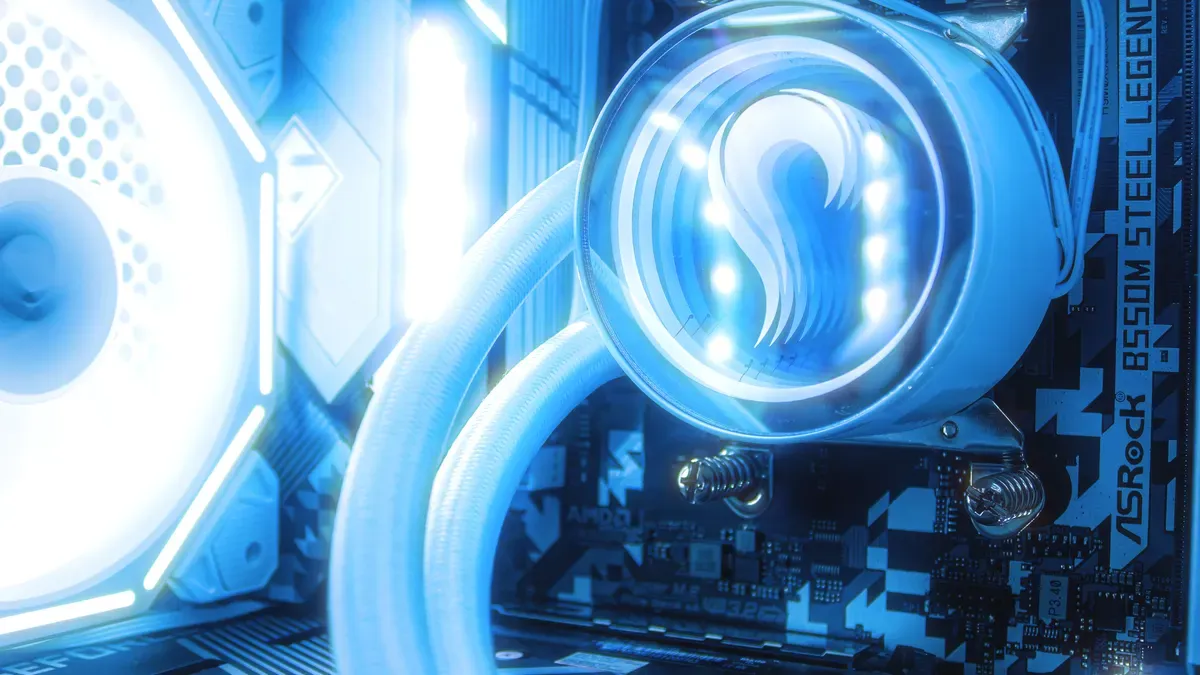
Comparing Data Center Liquid Cooling Methods
An analysis comparing Cold Plate and Immersive Liquid Cooling efficiency, infrastructure requirements, and deployment scenarios.
Features | Cold Plate Cooling | Immersion Cooling |
|---|---|---|
Heat Capture Scope | Partial, targets primary chips | Complete, covers all components |
Typical PUE Range | 1.10 to 1.20 | 1.02 to 1.08 |
Rack Power Density | 30 to 100 kW | 50 to 250+ kW |
Server Fan Requirement | Retains internal case fans | Eliminates fans completely |
Coolant Fluid Type | Water-glycol mixtures | Non-conductive dielectric fluid |
Facility Retrofit Fit | Ideal for existing sites | Best for new builds |
Rack Integration Form | Standard 19-inch vertical racks | Custom horizontal tanks |
Floor Load Impact | Minimal structural changes | Requires reinforced concrete floors |
Data center workers pick Cold Plate Cooling as a safe, partial upgrade. They use it for older buildings. They choose immersion liquid cooling for brand-new sites. It is a big change to full liquid cooling. Direct-to-chip cooling targets heat on small chips. It still uses air cooling for other parts. In contrast, total immersion sinks whole servers into special fluid. This liquid does not conduct electricity.
Engineers test both systems with care. They look at Thermal Design Power (TDP) limits. They check building update needs. They study Total Cost of Ownership (TCO). They also track Power Usage Effectiveness (PUE) scores. Direct-to-chip setups get average PUEs from 1.15 to 1.30. Single-phase immersion gets better PUEs from 1.03 to 1.10.
Mechanics of Cold Plate Cooling
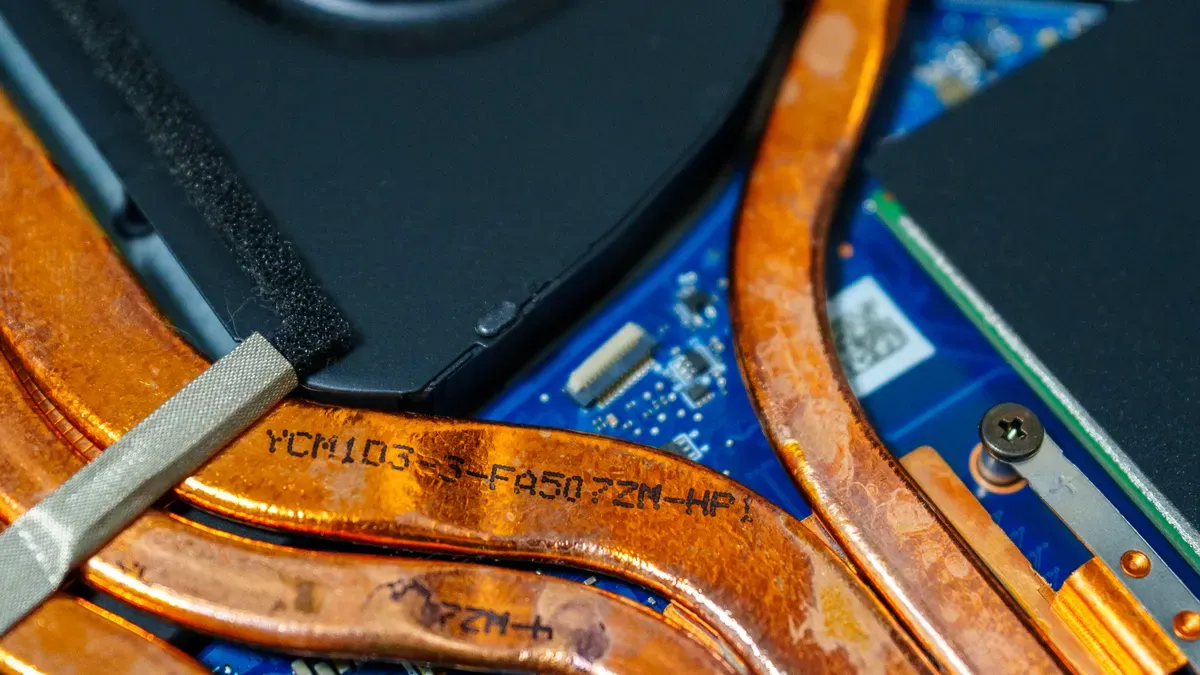
Direct-to-Chip Loops and Microchannels
Cold Plate Cooling attaches metal plates onto hot chips. Engineers put cold plates on CPUs and GPUs. Small channels inside copper plates move liquid coolant around. This fluid takes heat away from active silicon fast.
Microchannel Parameter | Design Behavior / Formula | Impact on Thermal Optimization |
|---|---|---|
Fin Spacing (P) | Decreasing spacing reduces hydraulic diameter ($D_h \approx 2P$) | Directly increases the convective heat transfer coefficient |
Fin Height (L) | Optimal height reaches limit at ~7.3mm for 0.2mm copper fins | Maximizes total heat dissipation area |
Fin Count (N) & Area | $A_{total} = N \cdot A_f \cdot \eta_f + A_b$ | Expands surface-enhanced heat transfer area |
Material & Thickness (t) | Pure copper ($k = 385\text{ W/mK}$) with thin geometry ($t \le 0.5\text{ mm}$) | Elevates fin heat transfer efficiency |
Coolant Distribution Units and Fluid Loops
A Coolant Distribution Unit pushes liquid inside sealed pipes. This device separates building water from delicate server parts. Manifolds send cool fluid to every server tray. The liquid picks up heat from hardware. It then moves to the heat exchanger. This action cleans out heat constantly. Raw water never touches sensitive electronics directly.
Tip: Coolant Distribution Units manage precise fluid pressure, which prevents leaks while maintaining optimal liquid flow across high-TDP server chips.
Partial Air Infrastructure Integration
Direct liquid loops collect 70% to 75% heat. Other parts like power units still create heat. Air systems must pull out remaining heat. Server rooms can use their current fans. They can keep old chillers too. This mixed method lets managers upgrade sites slowly. It lowers starting operational dangers.
Mechanics of Immersion Cooling
Single-Phase vs Two-Phase Tank Systems
Immersion cooling dips entire IT setups into fluid tanks. Systems use single-phase or two-phase methods.
Metric / Feature | Single-Phase Cooling | Two-Phase Cooling |
|---|---|---|
Thermodynamic Mechanism | Uses fluid heat capacity. No state changes happen. | Uses fluid boiling. Fluid vapor then turns back. |
Energy Absorption | Needs higher fluid flow rates to work well. | Soaks up more energy during phase changes. |
Heat Transfer Coefficient | Gives 500 to 5,000 W/m²·K of heat transfer. | Hits 10,000 to 100,000 W/m²·K heat performance. |
System Pressure & Enclosure Structure: Single-phase options work in open tanks. They run under regular room air pressure. Two-phase options need tightly sealed tanks. They must trap vapor inside carefully.
Fluid Volatility & Loss Characteristics: Single-phase liquids do not evaporate easily. They stay easy to reuse. Two-phase fluids boil off fast. Maintenance work lets them escape easily.
Two-phase tanks need tight seals. Seals stop fluid loss. Fixing servers breaks these seals often. Fluid evaporates away fast. A study by LBNL shows high costs. Buying new fluid eats up energy savings.
Dielectric Fluid and Total Submersion
Special dielectric fluid flows near active circuits. The liquid does not carry power. It touches every computer part directly. It touches power units and storage drives. Full immersion stops hot spots safely. It will not cause short circuits.
Complete Heat Capture Without Airflow
Full liquid submersion stops air needs inside servers. Small pumps move heavy liquid through heat exchangers.
Aspect | Air Cooling Mechanism | Liquid Immersion Mechanism | Mechanism for Eliminating Energy Waste |
|---|---|---|---|
Thermal Conductivity | Air moves heat very poorly across parts. | Liquids move heat 30 times better. | Direct contact removes heat barrier layers quickly. |
Cooling Power & Energy Use | Needs huge fans that use much power. | Uses tiny pumps to move liquid around. | Replaces big server fans with low-energy pumps. |
This liquid method takes 100% of heat. It removes all server fans completely.
Thermal Performance and Power Density
Chip TDP Limits and Heat Capture Rates
Powerful computing chips make lots of heat. Modern processors hit over 700 Watts TDP. New AI chips need over 1000 Watts. Data centers need good ways to remove heat. This keeps server parts working safely.
Cold Plate Cooling targets the hottest parts. Metal plates draw heat from chips. Tiny liquid channels move this heat away. This loop catches 70% of server heat. Memory and storage do not get this liquid. Air fans must cool these extra parts. Uncooled board areas can still get too hot.
Immersion cooling dips entire server blades in fluid. Liquid touches every part of the hot silicon. Single-phase fluid moves heat faster than air. The flowing liquid takes away all heat. Servers do not need extra air fans now. This stops hot spots on computer boards. Chips run at full speed without slowing down.
Rack Power Density Thresholds
Dense server setups change data center room layouts. Old air systems fail above 20 kW. Liquid systems fit more gear in smaller spaces.
Liquid Cooling Method | Typical Power Density Range | Maximum Attainable Power Density |
|---|---|---|
Cold Plate (Direct-to-Chip) | 30 to 100 kW/rack | 100 kW per rack |
Immersion Cooling Tanks | 50 to 250+ kW/rack | 250+ kW per rack (up to 150 kW for single-phase, exceeding 100 kW for two-phase) |
High-density racks need different floor space plans. One rack covers 6.5 square feet base. Supporting gear adds extra floor space needs. Total space grows to 64.6–96.9 square feet.
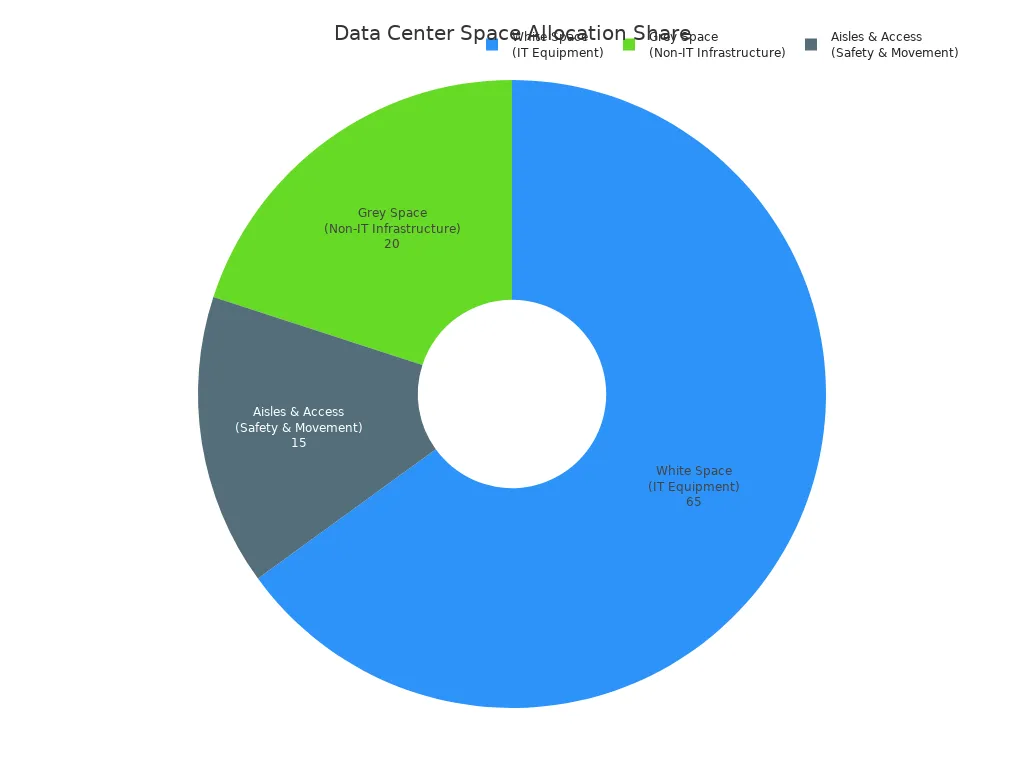
Physical vs. Total Footprint Disparity: Dense server racks need extra surrounding space. Workers use this space for safe maintenance pathways.
Expanded Infrastructure Requirements: Heavy power loads need extra liquid equipment. Coolant Distribution Units take up more grey space.
Access and Structural Needs: Heavy liquid racks need wider hall aisles. Stronger floors support the heavy tank weights.
Uniform Thermal Removal Performance
Direct-to-chip systems cool servers unevenly. Fluid gets warmer as it moves across chips. The liquid exit side stays much hotter. Air-cooled parts run hotter than liquid-cooled chips.
Immersion tanks cool all hardware evenly. Special fluid flows across every single component. The liquid absorbs heat from power supplies together. Network cards and storage drives cool down too.
Even fluid flow shields parts from quick heat spikes. The liquid seals electronics away from open air. This blocks harmful rust and stops dust buildup. Immersion setups keep dense server clusters safe.
Energy Efficiency and PUE Impact
Parasitic Fan Power Elimination
Old air cooling uses fast server fans. Fans use 20% of server power. Direct-to-chip plates remove main chip fans. Extra case fans still cool small parts. Immersion cooling drops every server fan. Small pumps move fluid with ease. This change cuts extra power use fast. More power goes directly to computer chips.
Facility Water Temps and Heat Reuse
Liquids trap heat much better than air. Cold plates grab heat from main chips. Immersion cooling tanks catch heat everywhere. Centers run warm water up to 45°C. They do not need big chillers. Sites easily capture hot exhaust water. Local buildings reuse this clean waste heat.
Key Takeaway: Hot liquid lets operators use dry coolers. This setup skips big chillers. It allows easy waste heat reuse.
Target PUE Benchmark Comparison
Lower energy needs cut overall PUE scores. Studies on immersion cooling show great results. Reports show PUEs from 1.02 to 1.04. The number 1.02 is best. See the typical PUE score ranges below:
Cooling Technology | Reported Baseline PUE Range |
|---|---|
Cold Plate (Direct-to-Chip) | 1.10 – 1.20 |
Single-Phase Immersion | 1.03 – 1.08 |
Two-Phase Immersion | 1.02 – 1.05 |
Immersion cooling gets lower PUE scores than cold plates. It removes all fans and air units. Cold plates still beat old air systems. Engineers choose based on energy goals.
Infrastructure, CapEx, and Retrofitting
Standard Rack Integration vs Custom Tanks
Cold Plate Cooling uses regular server racks. It fits right inside 19-inch frames. Workers slide new server trays into old racks. Staff keep using normal daily maintenance steps.
Immersion cooling changes server room designs fully. Workers swap upright racks for heavy tanks. Engineers drop server blades down into liquid. Teams must buy overhead cranes for fixes.
Floor Loading and Plumbing Requirements
Liquid setups put heavy weight on floors. Fluid tanks create huge weight spots. Normal raised floors break under this weight. Owners must strengthen concrete floors for heavy tanks.
Cold Plate Cooling avoids huge floor fixes. Direct-to-chip setups use small, light pipes. Distribution units pump less total liquid around. Facilities skip costly floor work entirely now.
Upfront CapEx vs Long-Term OpEx
Costs differ a lot between these systems.
Cost Category | Direct Cold Plate Deployment | Full Immersion System |
|---|---|---|
Initial Tank / Cabinet CapEx | Low (uses standard racks) | High (requires custom dielectric tanks) |
Fluid Investment Costs | Minimal (water-glycol mixtures) | Substantial (expensive dielectric fluids) |
Facility Floor Modifications | Minor pipe installation | Major structural slab reinforcement |
Long-Term OpEx Reductions | Moderate energy fan savings | Maximum utility and pump power savings |
Cold Plate Cooling costs much less early on. Managers reuse raised floors and chillers. Immersion cooling needs huge starting funds. Yet, full immersion saves most power over time.
Operational Risk and Maintenance
Fluid Handling and Servicing Workflows
Cooling care steps differ a lot here. Workers fix direct-to-chip setups in standard racks. Fast connectors let workers pull trays easily. No fluid leaks out during this process. Workers swap bad server parts fast.
Immersion cooling changes daily work completely. Workers use cranes to lift heavy servers. The servers soak in deep tanks. Workers must use special drip stations. Liquid drains slowly from wet server parts. Workers clean spills to keep floors safe.
Leak Detection vs Dielectric Safety
Cold plates hold water mixtures over hardware. Leaks can short out computer chips fast. Facilities use special tools to find leaks:
Category | Technology / Protocol | Function & Description | Limitations / Key Notes |
|---|---|---|---|
Detection | Resistive Leak Cables | Sensors route along pipes and raised floors | Detects leaks only after fluid escapes |
Detection | Flow & Pressure Tracking | Differential pressure sensors track CDU pump metrics | Spots slow leaks at manifold joints early |
Containment | CDU Boundary & Dual-Loop Isolation | Isolates primary loops and runs lower secondary loop pressure | Limits fluid loss during IT rack failures |
Safety Advantage: Dual-loop fluid isolation keeps secondary loops at lower operating pressures than primary facility loops. This pressure differential minimizes fluid loss during server connection failures.
Immersion tanks drop safe fluid risks fully. Safe fluid touches parts without shorts. Fluid leaks create messes without hurting chips.
Component Compatibility and Warranties
Direct-to-chip setups fit standard computer parts. Big sellers make cold-plate-ready servers. These servers include complete company warranties.
Immersion setups need careful parts tests. Fluid melts some plastics and seals. Integrators test parts before tank tests. This work protects official server warranties.
Strategic Selection for Data Centers
Data center teams choose liquid cooling for clear reasons. They check facility limits and budgets. They review density goals. Every choice needs clear testing of current buildings. Teams compare old sites with future plans.
Ideal Use Cases for Cold Plate Cooling
Managers pick direct-to-chip options for old buildings. Older sites use hot and cold aisles. They use raised floors and air handlers. Cold Plate Cooling fits into old rooms easily. Sites do not need huge rebuilding projects.
Operational Criteria | Cold Plate Optimization Profile | Primary Deployment Benefit |
|---|---|---|
Facility Type | Legacy Brownfield Data Centers | Minimizes structural slab modifications |
Rack Power Density | 30 kW to 80 kW per rack | Scales density using standard rack footprints |
Maintenance Model | Front/Rear Rack Access | Retains standard hot-swappable IT workflows |
Hardware Warranties | Native OEM Server Support | Preserves standard factory support agreements |
Teams choose direct-to-chip loops for targeted updates. Fast chips create hot spots. Other board parts run safely under fans. Systems run warm water to catch chip heat. Operators keep initial spending lower. Sites reuse old server racks and layouts. They keep old power distribution units.
💡 Deployment Tip: Direct-to-chip designs help teams wanting fast upgrades. These systems boost density without changing daily repair steps.
Data centers wanting normal server compatibility choose this. Big sellers send ready direct-cooled server trays. These servers come with full warranties. Techs fix units using normal slide-out movements. They use quick-disconnect liquid fittings and tools.
Ideal Use Cases for Immersion Cooling
Big operators use immersion cooling for huge power. New AI workloads push racks over 100 kW. Full liquid submersion removes all thermal limits. Fluid surrounds every circuit part completely.
+-------------------------------------------------------------------+
|               IMMERSION DEPLOYMENT DECISION VECTOR               |
+-------------------------------------------------------------------+
| [Greenfield Facility Build] ---> Enables Zero-Chiller Architecture|
| [TDP Threshold > 1000W]     ---> Removes Thermal Throttling Fully |
| [Target PUE < 1.05]         ---> Eliminates All Server Fan Power|
| [Harsh Environments]        ---> Seals Hardware From External Air |
+-------------------------------------------------------------------+
New builds gain big money advantages from immersion. Builders drop chillers, raised floors, and fans. They remove complex air ducts completely. Simple building designs lower high starting costs. This pays for custom tanks and fluids.
Immersion tanks solve hard environment issues for edge sites. They protect industrial locations too. Sealed tanks guard gear from dust and moisture. They stop rust gases and extreme hot weather. Operators run dense loads in hot deserts easily. They work in dirty industrial rooms too.
Finally, groups wanting top energy savings pick submersion. Removing server fans cuts total power use fast. Sites hit low PUE scores easily. They capture hot water for local heating needs.
Data center workers pick thermal solutions based on density rules.
Cold Plate Cooling: Best for fixing old air-cooled rooms with low risks.
Immersion Cooling: Great for new sites, extreme heat, and big power savings.
Money limits, team skills, and future hardware plans pick the final system.
FAQ
Which cooling method offers a better Power Usage Effectiveness (PUE)?
Immersion cooling gets better PUE scores. It scores between 1.02 and 1.08. Cold plate systems reach 1.10 to 1.20. Full submersion removes server fans completely. This cuts total facility energy waste fast.
💡 Efficiency Tip: Removing inner server fans drops facility PUE scores most.
Can facilities retrofit existing server racks for direct liquid cooling?
Teams add cold plate systems to standard racks easily. This needs almost no room updates. Immersion cooling needs horizontal tanks and special fluid. It also needs strong concrete floors.
How do TDP handling capabilities compare between the two systems?
| Feature | Cold Plate Cooling | Immersion Cooling | | : | : | : | | Target Hardware | CPUs & GPUs (Direct) | Entire Server Chassis | | Max Chip TDP | 700W+ per processor | 1000W+ per processor |
Cold plate loops cool hot chips well. Single-phase immersion cooling cools chips over 1000W. It removes heat evenly across all parts.
What are the main operational safety differences between fluids?
Cold plates push water-glycol through closed pipes. This liquid flows near live gear. Immersion cooling sinks gear into dielectric fluid. This special liquid prevents short circuits during leaks.
See Also
Understanding Key Differences Between Hot Tearing And Cold Cracking Metals
How Thermal Stress Affects Die Casting Dies And Industrial Components
Understanding Automated Die Casting Islands And How They Function Efficiently
How Proper Thermal Management Extends Electric Vehicle Battery Lifespan Significantly
Comparing Vacuum Heat Treatment Verses Advanced Thermomechanical Processing Methods
About Hunan Puka

Established in 2016 and based in Hunan, China, with a liaison point in Berlin, we are a Tier 2 supplier for the automobile industry. We specialize in the production of customized aluminum die-casting parts designed for machines with a closing force ranging from 280 to 1250 tons, with subsequent manufacturing process CNC machining and surface treatment. Our commitment to quality is reflected in our accredited quality management system, certified by ISO9001:2015 and IATF16949:2016 standards.