Why Aluminum Die Casting Is the Top Choice for Servo Motor Housings

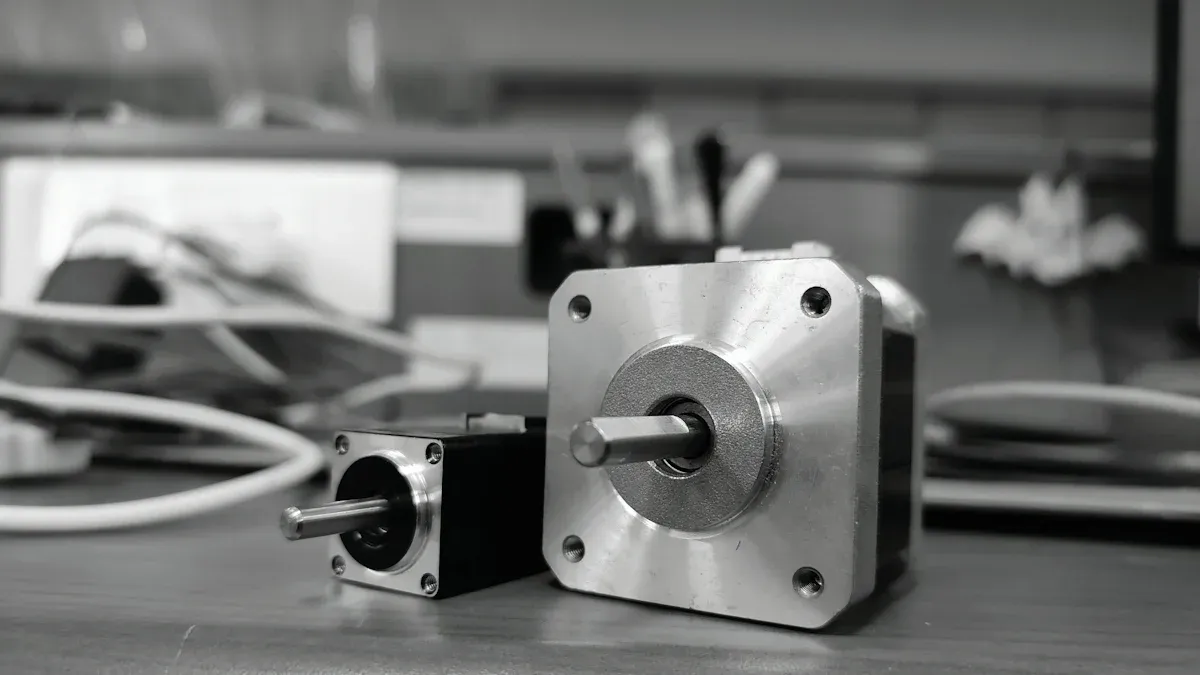
What makes a servo motor housing reliable and efficient? You need a part that handles heat, stays accurate, and survives tough conditions. Top manufacturers pick aluminum die casting for this important part. The aluminum motor housing provides superior thermal conductivity, moving heat away from the core quickly. Its light weight lowers inertia, improving dynamic response. You also get precise dimensions and low cost for mass production. This casting method allows for complex shapes and thin walls, enhancing design flexibility. For industrial servo motors, the housing must perform consistently under heavy loads. Aluminum meets that challenge. This article examines heat control, accuracy, and cost benefits. We start with how aluminum excels at heat dissipation for your motor.
Thermal Management for Servo Motor Housing
Heat Dissipation Efficiency
When you run a servo motor under heavy loads, heat becomes your biggest problem. The part must get rid of that heat fast to keep internal parts safe. Aluminum handles this better than any common option. Its thermal conductivity reaches 150–200 W/(m·K). That is about four times more than cast iron. Heat moves from the core through the walls with ease. You avoid overheating and keep steady performance.
The die-casting process gives you another edge. You can make complex cooling fins on the outer surface. These fins add more surface area for heat to escape. Air moves across them and takes heat away through convection. The fin density can match your exact cooling needs. You fit more cooling power into the same space. The die casting method also creates thin walls and complex shapes. The extra surface area from fins works well because aluminum conducts heat so effectively. The heat reaches every fin tip quickly.
Weight matters too. This metal has a density of about 2.7 g/cm³. This lighter weight cuts down the inertia of moving parts. Your servo motor reacts faster and with more precision. Precision transmission systems gain directly from this improvement. High-duty-cycle uses like robotics and automation depend on this quick response. Every gram you save leads to better performance. A lighter motor also puts less strain on support structures. This benefit results in simpler mounting options and lower system costs.
Water-Cooled Motor Housing Design
For high-power motors, air cooling alone may not be enough. You need a water-cooled motor housing for these high-power-density motors. These units push coolant through channels built into the walls. The water-cooled motor casing removes heat much faster than air. The key is the heat path from the core to the coolant.
Aluminum alloys shine in this area. Their high thermal conductivity moves heat quickly to the walls of the cooling channels. The coolant then carries that heat away. This fast transfer lowers thermal resistance between the core and the cooling medium. The water jacket works at peak efficiency. A steep temperature difference drives heat removal. The result is a cooler unit that keeps its rated output. The motor can handle higher loads without overheating.
Look at this comparison of materials for a water-jacket housing:
Property | Aluminum (6061-T6) | Cast Iron | Steel |
|---|---|---|---|
Thermal Conductivity (W/m·K) | 167–180 | ~40–50 | Significantly lower |
This metal offers about four times the conductivity of cast iron. This difference decides whether the unit stays within safe operating limits. A water-cooled design with these walls removes heat much faster than one made from iron or steel. The coolant can absorb more heat per unit of time. The motor runs cooler and lasts longer.
Different applications use different die-cast alloys. New energy vehicle traction motors use ADC12 and A380 alloys. These materials focus on lightweight design and high-volume production. Wind power and industrial servo motors use 6061 alloy. This choice stresses long-term reliability and dimensional stability. High-speed CNC machine tool spindle motors use 6061-T6. This alloy controls heat deformation under load. Each field picks the right balance of properties for its specific needs.
The high-pressure die casting process makes these water-cooled designs practical. You combine cooling channels, mounting bosses, and sealing surfaces in one molding step. The result is a complete thermal management solution. You get a housing that manages heat, supports components, and withstands harsh conditions. The aluminum motor housing delivers all of these benefits.
Precision and Complex Geometries in Aluminum Motor Housing
Dimensional Accuracy for Performance
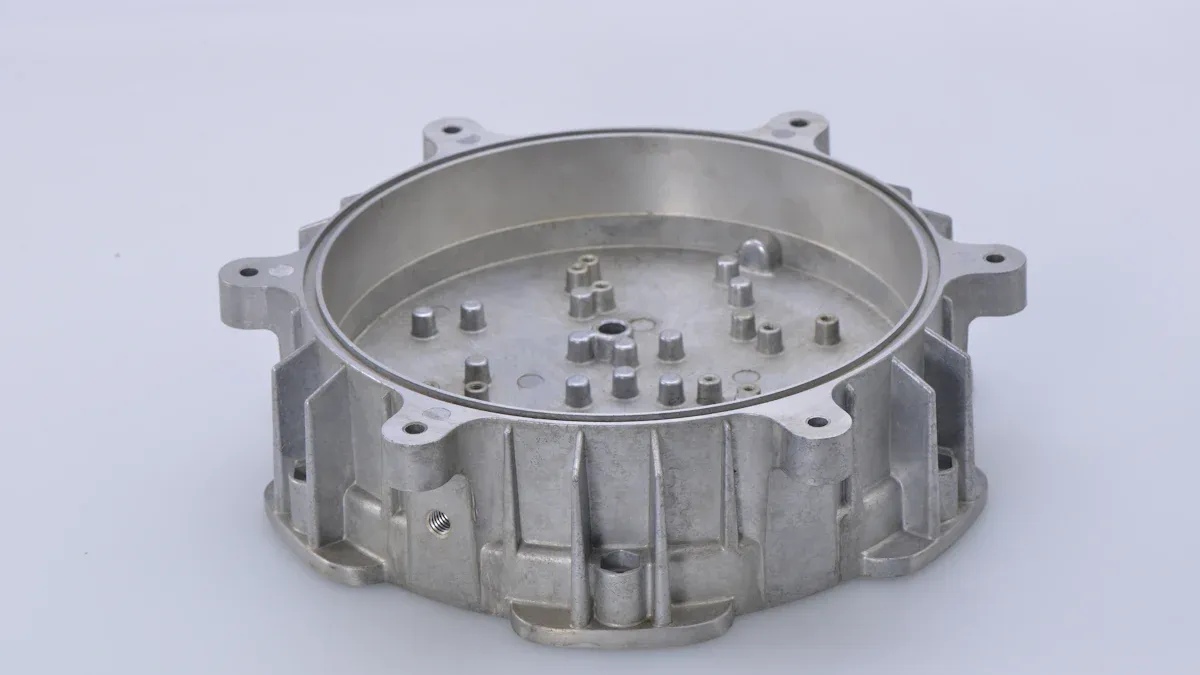
You need precise alignment between the rotor and stator inside your motor. Even a small deviation causes vibration, noise, and energy loss. Die casting delivers exceptional dimensional accuracy with tolerances of ±0.1 mm or better. This precision repeats across every unit you produce. Each housing matches the next one exactly. This repeatability matters when you assemble thousands of motors. You get consistent performance from the first unit to the last.
The casting process locks in these tight tolerances during the mold phase. You do not rely on skilled machinists to correct errors later. The mold defines the shape, and the molten aluminum fills every cavity precisely. This accuracy directly affects your motor's efficiency. Proper alignment reduces friction between moving parts. It also maintains the correct air gap between rotor and stator. A consistent gap means consistent torque output and smoother operation.
Surface finish plays a critical role in this precision. The table below shows what you can expect from a standard die-casting process:
Parameter | Value / Application |
|---|---|
Surface finish (Ra) for A380 die-cast aluminum | ≤ 1.6 µm (achievable with standard feeds and speeds) |
Relevant application | Pump and motor housings (providing structural integrity and heat dissipation) |
This smooth surface reduces friction and wear inside the motor. You get quieter operation and longer component life. The finish also improves the sealing surface for gaskets and O-rings. A better seal means better protection against dust and moisture.
Design Flexibility with Thin Walls
You gain remarkable design freedom with die casting. The process allows complex internal structures in a single molding step. You can create mounting bosses, bearing seats, and cable routing channels without secondary machining. These features save assembly time and reduce part count. Your housing becomes a complete structural solution rather than a simple shell.
Thin walls offer another significant advantage. Die casting produces walls that are thinner than those from sand casting or permanent mold casting. These thin walls reduce material usage and lower the overall weight of your motor. The rapid cooling of thin aluminum sections creates a fine-grained microstructure. This structure improves mechanical strength without additional heat treatment. You get a stronger part with less material.
Thin-walled components reduce resource use but require precise strength control. With thin walls, aluminum cools quickly, leading to a fine-grained microstructure that improves mechanical strength. This approach achieves material savings of over 7%, generally up to 30%, by actively controlling solidification time.
This material efficiency translates directly to cost savings. You use less raw material for each housing. You also reduce the energy needed for melting and handling. The benefits extend beyond the casting itself:
Thinner walls require greater process know-how but result in a higher category product.
Reducing the weight of a part by 15% reduces emissions and increases fuel efficiency by 25%.
Aluminum die-cast parts provide this lightweight property naturally.
The combination of thin walls and complex geometry makes die casting ideal for modern motor designs. You can integrate cooling channels, mounting points, and sealing surfaces into one component. This integration reduces the need for separate brackets and fittings. Your assembly becomes simpler and more reliable.
For industrial servo motors, this design flexibility proves essential. Each application may require different mounting configurations or cable entry points. Die casting accommodates these variations without expensive tooling changes. You adapt the mold once, then produce thousands of identical housings. The aluminum motor housing you create meets exact specifications while keeping production costs low. This balance of precision, strength, and efficiency makes die casting the clear choice for your servo motor housing needs.
Cost-Effectiveness of Die Casting for Mass Production
High-Volume Production Savings
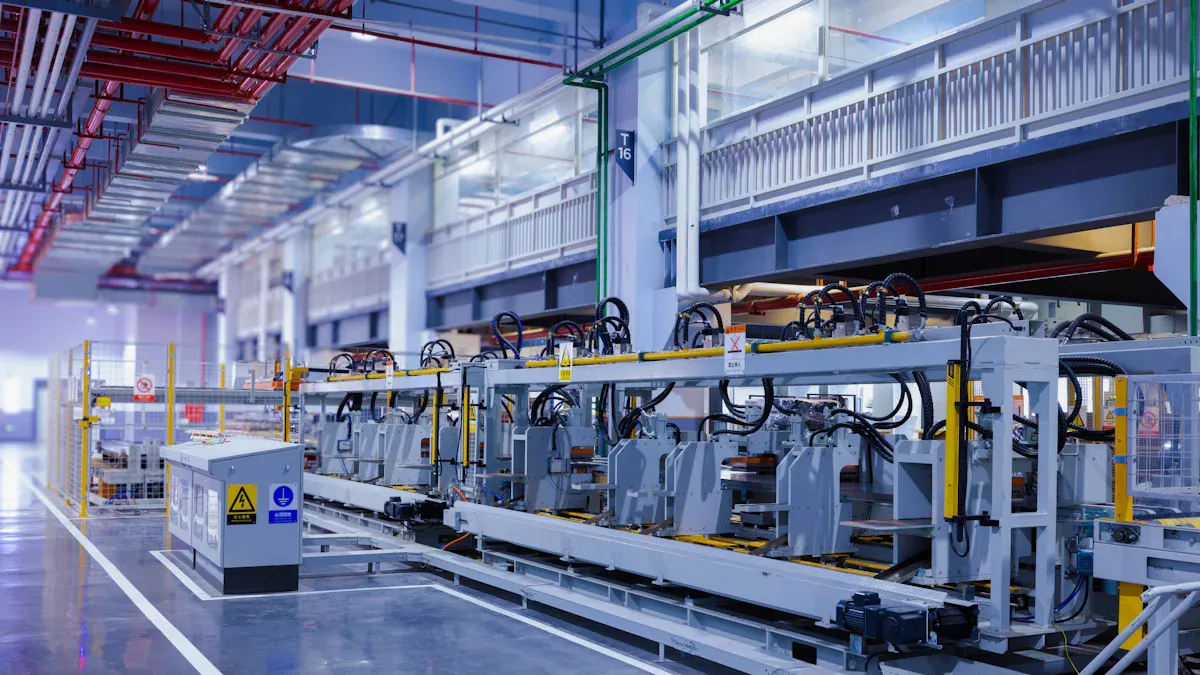
Choosing a manufacturing process means weighing upfront tooling costs against per-unit price. Die casting needs an initial mold investment, but that cost shrinks as production volume grows. Spread the tooling cost across thousands of units, and each part's share becomes tiny. That is why die casting works so well for large runs.
Die casting becomes more cost-effective when the tooling cost can be spread across a large production volume. It is a strong choice for aluminum, zinc, or magnesium parts with stable geometry, repeat orders, and consistent dimensional requirements.
Volume changes the economics dramatically:
Production Volume | Upfront Tooling Cost | Cost Per Part | Economic Outcome |
|---|---|---|---|
Low (e.g., 1,000 units) | High | Relatively High | Investment casting is preferred due to lower entry cost |
High (e.g., 1,000,000+ units) | High | Extremely Low | Die casting becomes superior; tooling cost is fully amortized |
Multi-cavity molds push this advantage further. You produce more parts per cycle without a big cost jump. Durable tooling also lasts longer, cutting downtime for replacements. The result? High-volume production drops your per-unit cost sharply, making die casting the clear economic choice.
Reduced Secondary Operations
Other processes struggle to match die casting's efficiency. CNC machining gives you fast turnaround for low volumes, but it wastes material and uses machine time for each part. Sand casting offers lower tooling costs, yet its slower cycle times and higher labor needs hurt large batches. Die casting produces near-net-shape parts quickly, minimizing the need for post-machining. You save both material and labor.
Aluminum adds another layer of savings. You can recycle scrap from the die-casting process completely and repeatedly without quality loss. Recycling uses only 5% of the energy required for primary aluminum production, cutting energy consumption by 95%. This recycled material costs far less than virgin aluminum, reducing your overall material expenses. You also support a circular economy by turning scrap into high-value products.
The process itself supports many applications. Industrial servo motors rely on consistent housings at scale. New energy vehicle traction motors demand lightweight, cost-effective parts. CNC machine tool spindle motors need dimensional stability. High-power motors require robust thermal management. Each application benefits from high-pressure die casting's speed and repeatability. Your aluminum motor housing arrives with complex features already formed, reducing secondary operations and assembly time. This combination of low per-unit cost, minimal waste, and recyclable material makes die casting the smart choice for your servo motor housing.
Material Comparisons and Design Considerations
Aluminum vs. Cast Iron and Steel
When you pick housing materials, the choice is clear. Cast iron and steel have powered industrial motors for many years. But aluminum beats them in several ways. The biggest difference is heat transfer. Aluminum reaches about 200 W/m·K. Cast iron only gets to around 50 W/m·K. This means your motor stays cooler with an aluminum motor housing.
Weight also tells a strong story. Aluminum alloys weigh about 2.7–2.9 t/m³. That makes them roughly 60% lighter than steel. Less weight means lower inertia. Your motor responds faster and more smoothly. Many engineers are surprised by the strength comparison:
Material | Weight | Strength Characteristics |
|---|---|---|
Cast Aluminum | Lightweight | Strong-to-weight ratio; higher tensile strength than cast iron |
Cast Iron | Significantly heavier | Higher compressive strength; lower tensile strength than cast aluminum |
Aluminum castings are much lighter than castings made from other metals. Despite their light weight, the alloying process ensures that an aluminum casting will remain hard and retain a good strength to weight ratio. Many aluminum alloys are stronger than steel.
Corrosion resistance adds another benefit. Cast iron housings failed after 1–2 years in saltwater places like seafood processing plants. Aluminum naturally forms a protective oxide layer. This layer resists corrosion without extra treatment. This durability extends your housing's service life well beyond 20 years in standard industrial environments.
Key Design Features for Durability
Your housing design must handle sealing, surface protection, and mounting integration. IP ratings show how well your housing blocks dust and moisture. IP55 suits most general industrial uses. IP65 and IP66 handle powerful water jets. IP69K withstands high-pressure steam cleaning in food and pharmaceutical plants. Gasket systems at end shields, conduit entries, and drain plugs make these ratings possible.
Surface treatments boost aluminum's natural protection. The table below shows your options:
Surface Treatment | Key Technical Parameters | Primary Application Context |
|---|---|---|
Powder coating | 60–80 µm thickness; passes ASTM B117 salt spray at 500–1000 hours | General industrial motors (cost-effective above 500 units) |
Hard anodizing (Type III) | 25–50 µm oxide layer; excellent abrasion resistance | Mechanical contact, sliding wear, moderate chemical exposure |
Chromate conversion coating | Thin conformal coating; maintains electrical conductivity | Primer adhesion layer; grounding/EMC-shielded motors |
Epoxy/polyurethane paint systems | Two-coat systems with zinc-rich primer | Wash-down (IP55/IP65/IP69K) and chemical plant environments |
Bearing seat wear becomes the limiting factor for long service life. For motors exceeding five bearing change cycles, specify hard-anodized or sleeved bearing bores. This design consideration prevents premature failure.
Different applications demand different die-cast alloys. New energy vehicle traction motors prioritize lightweight construction. CNC machine tool spindle motors need dimensional stability under load. High-power motors require maximum thermal transfer. High-pressure die casting accommodates each application with tailored alloy selection. Your design choices today determine your motor's reliability tomorrow.
Aluminum die casting gives you everything you need for a servo motor housing. You get great thermal management, exact dimensions, and design flexibility in one process. The aluminum motor housing manages heat well while staying light. This casting method saves money for making many parts. Your motor works dependably in tough jobs.
These benefits fix real design problems. Industrial servo motors, new energy vehicle traction motors, CNC machine tool spindle motors, and high-power motors all gain from this method. Each use demands strength and steady performance. Aluminum gives both.
Think about aluminum die casting for your next housing design. Robotics, automation, and car industries already use this tested method. Your design deserves the same dependability.
FAQ
How Does Aluminum Die Casting Handle Heat?
Aluminum pulls heat away from the motor core fast. Its thermal conductivity hits 150–200 W/(m·K). This keeps your motor cool during heavy use. The die casting process also makes cooling fins that add surface area. More surface area lets heat escape quicker.
Is Die Casting Affordable for Small Batches?
Die casting needs a mold investment upfront. That cost spreads across every part you make. For small runs, the per-unit price stays high. For large volumes, each housing becomes very cheap. Think about your production numbers before picking this method.
What Precision Can You Expect?
Die casting holds tolerances of ±0.1 mm or better. This accuracy repeats across every unit. Your rotor and stator stay aligned properly. The smooth surface finish reaches Ra 1–2 µm. This cuts friction and wear inside your motor.
How Does Aluminum Compare to Cast Iron?
Aluminum weighs about 60% less than steel. It conducts heat roughly four times better than cast iron. Aluminum also resists corrosion naturally through an oxide layer. These traits make aluminum the better pick for servo motor housings in most uses.
Can You Build Water-Cooled Designs?
Yes. The water-cooled motor housing uses channels built into the walls. Coolant flows through these passages and removes heat fast. Aluminum's high conductivity delivers heat to the coolant quickly. This design keeps high-power motors within safe temperature limits.
See Also
Comparing Aluminum And Magnesium For Lightweight Die Casting Applications
Explaining How Aluminum Extrusion And Die Casting Function
Essential Perspectives On The 2025 Automotive Aluminum Die Casting Industry
Supporting Emerging Robotics Market With Die Cast Parts And Materials
Finding The Optimal Die Casting Clamping Force For Your Product
About Hunan Puka

Established in 2016 and based in Hunan, China, with a liaison point in Berlin, we are a Tier 2 supplier for the automobile industry. We specialize in the production of customized aluminum die-casting parts designed for machines with a closing force ranging from 280 to 1250 tons, with subsequent manufacturing process CNC machining and surface treatment. Our commitment to quality is reflected in our accredited quality management system, certified by ISO9001:2015 and IATF16949:2016 standards.