4J42 Alloy: The Secret to Perfect Glass Seals


You face a big challenge when sealing glass to metal: thermal stress mismatch. As the assembly cools, different expansion rates create cracks and leaks. These cracks damage the vacuum or gas seal, leading to device failure. 4J42 alloy solves this problem. Manufacturers made this nickel-iron alloy to match the thermal expansion of borosilicate glass exactly. Its composition of roughly 41-42% nickel balances the expansion coefficient. This match produces stress-free, airtight seals. You find these seals in everyday electronics and advanced aerospace systems. The alloy's reliability makes it essential for sensitive parts like LEDs, sensors, and vacuum tubes. Without this precise thermal match, your devices would fail too early. 4J42 alloy keeps the seal strong even under repeated thermal cycling.
Key Properties of 4J42 Alloy
Thermal Expansion and Composition
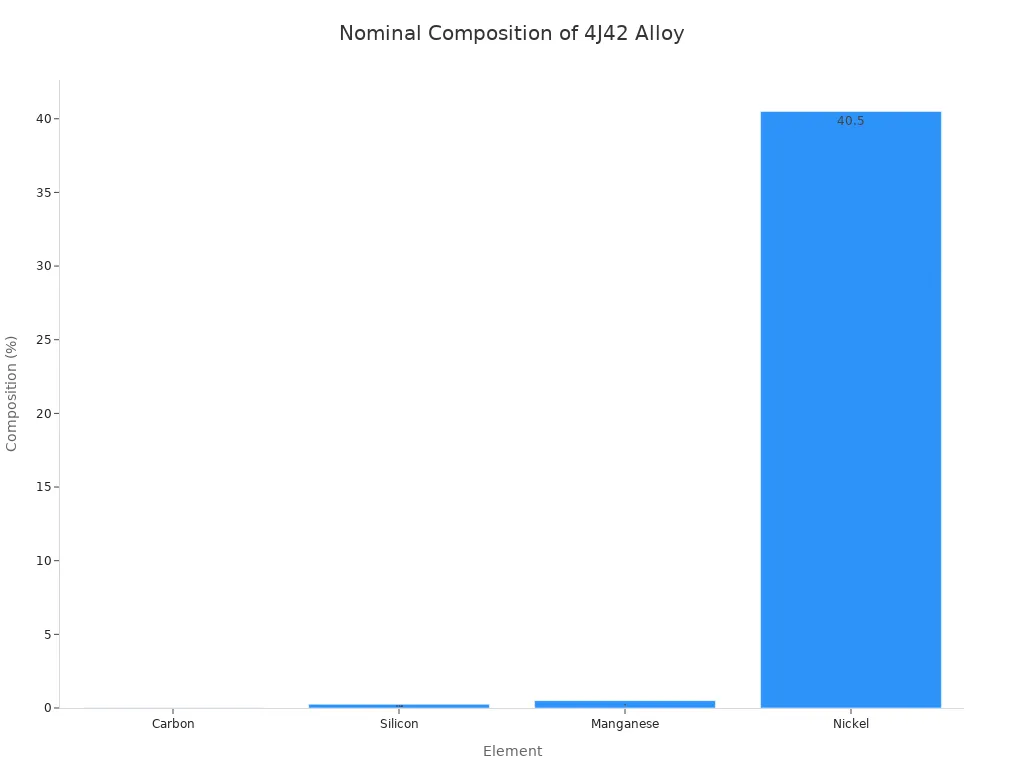
You need to know what makes 4J42 alloy special. Its chemical makeup is mostly nickel and iron. The standard mix has about 42% nickel, and the rest is iron. Small amounts of other elements are present: carbon at 0.02%, silicon at 0.25%, and manganese at 0.50%. You might also see this material called Alloy 42 or FeNi42. Industry rules control how it is made. ASTM F1684 covers this alloy, with UNS equivalent K94100 and Werkstoff equivalent 1.3917.
The main feature is the low thermal expansion coefficient. This property matches hard glass and ceramics. When you heat the alloy, it grows at nearly the same rate as borosilicate glass. This match stops stress cracks during cooling. The Curie point is very important here. Below this temperature, the alloy keeps its low expansion behavior. Above it, expansion speeds up quickly. You must think about this when designing seals that work near temperature limits.
Mechanical and Physical Characteristics
You get more than just thermal fit from this alloy. Corrosion resistance comes standard, protecting your seal from damage over time. Fatigue resistance helps the material handle repeated heating and cooling without cracking. Formability lets you shape it into complex designs. Solderability and weldability make assembly easy.
The mechanical properties support tough jobs. In the annealed state, tensile strength reaches 75 ksi (517 MPa). Yield strength measures 40 ksi (276 MPa). These numbers come from the CarTech Glass Sealing 42 data sheet. You can trust these values when designing structural parts. The material stays strong under mechanical stress while keeping the thermal match.
Physical traits support the mechanical ones. The alloy's magnetic properties change with temperature, which matters for some sensor uses. Its density and electrical resistivity fit electronic housings. You get a material that works well in many ways. This mix of properties makes 4J42 alloy the top choice for critical glass-to-metal seals.
Why 4J42 Alloy Creates Perfect Seals

The Science of a Stress-Free Interface
You need a precise thermal expansion match to create a hermetic seal. The glass and metal must shrink at nearly the same rate as the assembly cools. 4J42 alloy achieves this match with borosilicate glass. The alloy's expansion coefficient tracks the glass from the annealing point down to room temperature. This tracking prevents stress fractures that destroy ordinary seals.
Think about what happens during cooling. The metal header contracts faster than the glass. This differential contraction compresses the glass and induces permanent strain. Three principal stresses appear at the interface: axial stress along the pin axis, radial stress inward from the header, and tangential hoop stress around the circumference. The residual compressive stress magnitude depends on how far the glass expansion curve shifts relative to the metal at room temperature. Excessive compression creates harmful tensile forces in perpendicular planes. Those forces cause cracking.
The Curie point plays a critical role here. Below this temperature, the alloy maintains its low expansion behavior. Above it, expansion accelerates rapidly. You must account for this when designing seals that operate near temperature limits. The alloy's composition of roughly 41-42% nickel produces the exact expansion curve needed. This curve matches hard glass and ceramics within a narrow tolerance. The result is a stress-free interface that survives repeated thermal cycling without failure.
The annealing point matters too. Below this temperature, no significant stress relief occurs in the glass. The metal continues to contract, compressing the glass further. This compression actually strengthens the seal. The glass sits in a state of beneficial compressive stress. That stress prevents crack propagation. You get a seal that holds vacuum or gas pressure reliably for years.
Wetting and Oxide Adhesion
A perfect seal requires more than just matching expansion rates. The molten glass must bond chemically to the metal surface. This bonding depends on wetting. Wetting describes how well a liquid spreads across a solid surface. Glass wets metal poorly without preparation. The metal surface needs an oxide layer to promote adhesion.
The oxide layer forms during the sealing process. You heat the alloy in an oxidizing atmosphere before applying the glass. This heating creates a thin, controlled oxide film on the surface. The oxide layer acts as a bridge between the metal and the glass. Molten glass wets the oxide readily. The glass then bonds chemically to the oxide through ionic and covalent interactions.
The oxide layer must have the right thickness and composition. Too thin, and the glass won't wet properly. Too thick, and the oxide becomes brittle and flakes off. Manufacturers control the oxidation process carefully. They monitor temperature and atmosphere to achieve the optimal oxide layer. This control ensures consistent seal quality across production runs.
The nickel-iron composition of 4J42 alloy supports this oxide formation. The alloy forms a stable, adherent oxide that bonds strongly to both the metal substrate and the glass. This oxide layer also protects the underlying metal from further oxidation during service. The combination of thermal match and oxide adhesion creates a truly hermetic seal. You get a barrier that blocks gas molecules and moisture completely.
The wetting process also affects seal strength. Good wetting produces a continuous bond across the entire interface. Poor wetting leaves voids and weak spots. Those defects become leak paths over time. The controlled oxide layer ensures complete wetting. Your seal remains airtight through temperature swings, vibration, and mechanical shock.
Primary Applications in Modern Industry
Electronics and Optoelectronics
You find 4J42 alloy in many electronics you use every day. LEDs rely on this material for their glass-to-metal seals. The alloy creates a barrier that keeps moisture and oxygen away from sensitive chips. Without this protection, LED performance drops fast. The seal keeps the inside stable for years.
Sensors also depend on this alloy to work well. Pressure sensors, temperature probes, and gas detectors use glass-sealed feedthroughs. These parts carry electrical signals through the sensor housing. The 4J42 alloy keeps the glass intact during temperature changes. A cracked seal would let contaminants in and ruin the readings. You trust these sensors in cars, medical tools, and industrial controls.
Relays and vacuum tubes are another key use. These parts need vacuum-tight enclosures to work right. The alloy's thermal match stops stress cracks during sealing. This match also keeps the seal strong during soldering and later use. Vacuum tubes in audio gear and high-power transmitters depend on this reliability. The alloy's steady expansion keeps the glass-to-metal joint stable across the working temperature range.
Aerospace and Vacuum Components
Aerospace systems need the highest reliability from every part. 4J42 alloy shows up in flight-critical sensors and sealing parts. These parts face extreme temperature swings during flight. The alloy's controlled expansion stops seal failure in these harsh conditions. You find this material in altimeters, gyroscopes, and engine monitors.
The alloy's steady behavior makes it great for vacuum uses. Vacuum feedthroughs in scientific tools use this material a lot. These feedthroughs keep a perfect vacuum seal while carrying electrical signals. The alloy's corrosion resistance guards the seal from harsh environments. Its fatigue resistance helps the seal survive vibration and thermal cycling. Aerospace engineers pick 4J42 alloy because they can predict its performance exactly. This predictability leads directly to mission success and passenger safety.
The material also appears in satellite parts and space exploration gear. These uses demand seals that never leak. The alloy's proven record in extreme environments makes it the top choice. You can count on this material where failure is not an option.
Machining 4J42 Alloy: Best Practices
CNC Machining vs. Die-Casting
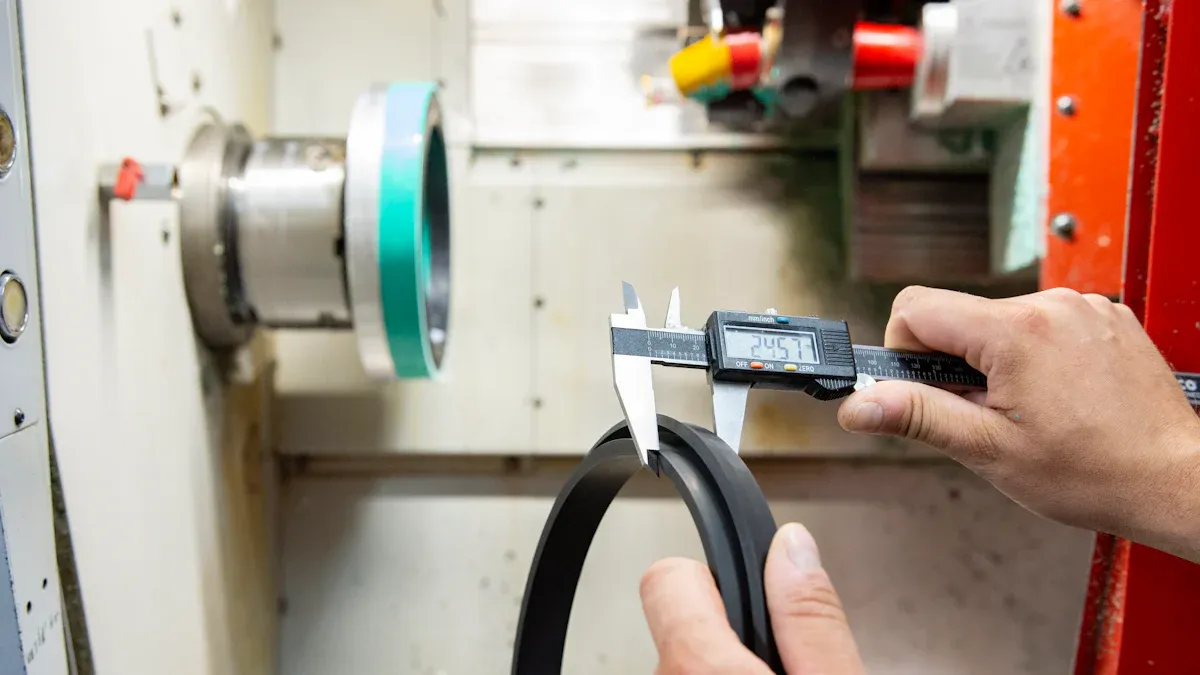
You cannot die-cast 4J42 alloy. The high nickel content stops the material from flowing well in a mold. The metal hardens fast under pressure. This causes cracks and flaws. CNC machining works much better. You remove material with careful cutting. This way avoids the problems of melting. The alloy works well with sharp tools. You get tight tolerances for glass-sealing parts. The cut surface is ready for the oxidation step.
You must always use sharp tools. Dull tools create heat and pressure. This hardens the material in spots. Hard spots make later cuts harder. Plan your steps to keep the right tool shape and speed. You stop tool wear by picking the correct speeds. This keeps the machining process steady. Your parts stay within the needed size.
Comparison with ADC12 and 304 Stainless Steel
ADC12 is an aluminum alloy. It cuts quickly at high speeds. Chips form smoothly. Tool wear stays low. You use normal carbide tools. Coolant helps but is not needed. 304 stainless steel is harder to cut. It hardens as you cut it. You need sharp tools with a positive angle. Cutting speeds are slower. Chips form as long, tough strands. These chips can wrap around the tool. You need chip breakers or high-pressure coolant. Tool wear is higher than with aluminum.
4J42 alloy is between these two. It cuts easier than 304 stainless steel. It needs more care than ADC12. You use carbide tools with sharp edges. Cutting speeds are moderate. The alloy makes chips that are easy to handle. You need coolant to control heat. This stops the metal from hardening. The nickel content can cause damage with dull tools.
You must do stress-relief treatment after cutting. Cutting leaves leftover stress in the metal. These stresses cause the part to change shape over time. The part may bend or crack during heating and cooling. A stress-relief anneal removes these inside stresses. You heat the cut part to a set temperature. Then you cool it slowly. This treatment keeps the part stable. It stops cracking during the glass-sealing process. Your seals stay tight and reliable.
The secret to perfect glass seals lies in 4J42 alloy's precise thermal expansion match. This engineered property eliminates stress fractures during cooling. You get reliable, hermetic seals that withstand harsh conditions.
The alloy's unique profile combines corrosion resistance, fatigue strength, and formability. These traits make it practical for custom components. CNC machining handles this material well, giving you tight tolerances for demanding applications.
Ready to build your next sealed component? Submit your drawings today. Our team evaluates tolerances, surface finish, and heat treatment requirements. We partner with you to ensure engineering success from prototype to production.
FAQ
Why can't you die-cast 4J42 alloy?
The high nickel content stops the metal from flowing well in a mold. Under pressure, the metal hardens fast. This leads to cracks and flaws. CNC machining is the best way to shape this alloy.
How does 4J42 alloy compare to 304 stainless steel for machining?
4J42 is easier to cut than 304 stainless steel. You need carbide tools with sharp edges. Cutting speeds stay moderate. Coolant controls heat and stops work-hardening. 304 stainless needs slower speeds and special chip handling.
Why is stress-relief treatment necessary after machining?
Cutting leaves internal stresses in the metal. These stresses cause size changes over time. The part may bend or crack during heating and cooling. A stress-relief anneal removes these internal stresses. Your seals stay stable and reliable.
What role does the oxide layer play in glass-to-metal sealing?
The oxide layer helps molten glass wet the metal surface. Glass bonds chemically to the oxide through ionic interactions. The right thickness ensures a complete, airtight seal. Too thin or too thick causes defects.
See Also
How Magnesium Alloys Transform Lightweight Production Methods
Semi-Solid Casting Explained: An Easy-To-Understand Overview
Selecting Optimal Die Casting Clamping Force For Your Components
Understanding Shrinkage Porosity: Causes And Effects In Metal Casting
Coefficient Of Thermal Expansion: Its Importance In Die Casting Processes
About Hunan Puka

Established in 2016 and based in Hunan, China, with a liaison point in Berlin, we are a Tier 2 supplier for the automobile industry. We specialize in the production of customized aluminum die-casting parts designed for machines with a closing force ranging from 280 to 1250 tons, with subsequent manufacturing process CNC machining and surface treatment. Our commitment to quality is reflected in our accredited quality management system, certified by ISO9001:2015 and IATF16949:2016 standards.